Key Factors That Influence Carpet Tile Rates
Material Quality and Fiber Type
The carpet tiles rate in South Africa is rarely about a single number. It is an equation shaped by how raw materials respond to our intense sunlight and high humidity. A cheaper price upfront often hides a faster decline in fibre resilience, which becomes obvious after two Highveld summers.
Material choice drives the bulk of the cost. Solution dyed nylon offers superior colour fastness and handles heavy foot traffic, which is why it commands a premium. In contrast, polypropylene and polyester blends are more budget friendly, but they can crush under office chairs and fade near large windows. This trade off between longevity and initial spend defines the true value.
Another significant lever is the construction density. A tile with a tighter loop pile and a higher face weight simply performs better. It resists indentation and keeps its texture for years. The backing also matters; a bitumen or PVC base adds stability, making installation easier and reducing long term maintenance.
Consider these aspects when reviewing a quote:
– Fibre type: nylon versus olefin versus wool blends
– Face weight: measured in grams per square metre
– Backing material: bitumen, PVC, or polyurethane
– Yarn twist and heat set treatment
Bulk purchasing changes the landscape completely. The carpet tiles rate scales down considerably for large commercial projects, often reducing the square metre price by 15 to 25 percent. Suppliers in Gauteng and the Western Cape adjust their logistics costs based on distance, so shipping from a local warehouse can save you more than a distant bargain.
We must also account for the installation surface. A perfectly level concrete floor allows for a loose lay method, which is faster and cheaper. An uneven subfloor requires adhesives or a self levelling compound, adding to the overall project cost. When you compare prices, always ask what the quote includes beyond the product itself.
Finally, remember that durability is a form of currency in our climate. A tile that withstands commuter traffic in Sandton or coastal salt air in Durban protects your investment. The carpet tiles rate is thus a reflection of how well the product anticipates the environment it will live in, making material and construction the true arbiters of value.
Tile Backing and Construction Methods
The carpet tiles rate rarely tells you how a tile was built. The backing and construction methods decide whether that rate remains fair after years of use. A dense loop pile with a high face weight resists compression, but the backing holds everything together. Bitumen provides rigid stability, while PVC offers flexibility for demanding subfloors. Polyurethane backings are lighter and easier to cut, which can reduce installation time.
Construction methods also shape the final cost, and the carpet tiles rate often hides these differences. Tufted tiles with a tight gauge and heat set yarns maintain their appearance under rolling chairs and heavy footfall. Loose lay systems depend on precise manufacturing tolerances. If the tile is not perfectly square, the installation can fail or take far longer. I have seen cheap rates turn expensive once installers start fighting with warped edges. Ask about the backing density and the construction method before comparing quotes.
Brand Reputation and Warranties
Why does one carpet tiles rate look like a bargain while another demands a premium? The price difference often boils down to who manufactured the product and the promise they make behind it. A well-known brand carries years of engineering data, field testing, and a reputation staked on performance. They have more to lose by selling a flawed product, so their quality control tends to be stricter. When you choose an established name, you are paying for peace of mind, not just the yarn.
That peace of mind is quantified in the warranty. Warranties are the manufacturer’s technical definition of how long the flooring will hold up. They are not all created equal. You need to read the fine print regarding stain resistance, color fade from sunlight, and edge ravel. A robust warranty usually indicates that the manufacturer expects the tile to last. A limited or overly complex warranty with numerous exclusions suggests they know the product might fail under normal commercial stress.
Here is what separates a solid warranty from a flimsy one:
– Coverage for heavy rolling loads, including the weight of office chairs.
– A defined lifespan that exceeds the industry standard of 10 years.
– Clear terms on moisture and humidity conditions that void the claim.
– Protection against premature wear, such as fiber loss or zippering.
The carpet tiles rate on the invoice reflects the risk transfer. If the manufacturer offers a 15-year warranty covering wear and fading, they are shouldering the risk that the tile will perform. If they only offer a 5-year warranty against manufacturing defects, you are shouldering the risk of visual degradation.
In South Africa, where UV exposure is intense and temperature swings are common, this becomes a critical factor. A cheaper tile with a weak warranty might look identical in the showroom. But after two summers of harsh sunlight, that initial low price loses its appeal. The true cost of the floor is the initial buy-in plus the cost of premature replacement. A strong warranty lowers the chance of that second cost ever materializing. Paying a slightly higher rate for a brand that stands behind their product is rarely a mistake. It is a calculated decision to cap your long-term liability and avoid the headache of negotiation and disruption later.
Order Volume and Bulk Discounts
Volume changes everything. When you order carpet tiles rate structures shift, and the negotiation becomes less about the product and more about the relationship.
Suppliers have production schedules and logistics networks that thrive on predictability. A single pallet creates administrative friction. A truckload creates efficiency. That efficiency translates directly into your cost per square meter. The challenge is knowing where the real thresholds lie.
Consider the factors that genuinely influence pricing:
– Tiered thresholds: Discounts rarely move in a straight line. A jump from 500 to 1,000 square meters might unlock a significant reduction, while moving from 1,000 to 1,500 yields almost nothing. The sweet spot sits just above a common project size.
– Logistics costs: Freight is often the hidden variable. If you are in Johannesburg and the stock is in Durban, the delivery cost could erode your savings. Local stock versus factory order changes the equation entirely.
– Consistency of demand: A single bulk order helps a supplier fill a gap. A contractual commitment for regular purchases over a year lets them plan production. That commitment holds more leverage than a one-off volume.
– Stock availability: Off-the-shelf colours and patterns negotiate differently than a custom dye lot. Standard lines are easier to discount because the manufacturer carries the inventory risk.
The psychology of procurement matters here. A larger order transfers risk from the manufacturer to you. You are committing capital to floor space that might sit in storage. That risk deserves compensation. When you negotiate, you are not just asking for a lower price; you are asking for a reward for absorbing that burden.
The best approach is to ask about tiered pricing openly. Suppliers often have unpublished rates for specific volumes. They will not volunteer them. You need to create a scenario where they see the potential for a long-term partnership, not a one-off transaction.
Remember that the lowest carpet tiles rate is not always the best value. A slightly higher price per tile with better delivery scheduling and a smoother installation process can save you money in labour and downtime. The total installed cost is what matters, not just the material cost. When you build this understanding into your procurement strategy, you position yourself as a serious buyer. That reputation follows you across projects and unlocks better terms each time.
Market Trends and Raw Material Costs
Breaking Down Carpet Tile Rate Structures
Price per Square Foot vs. Per Tile
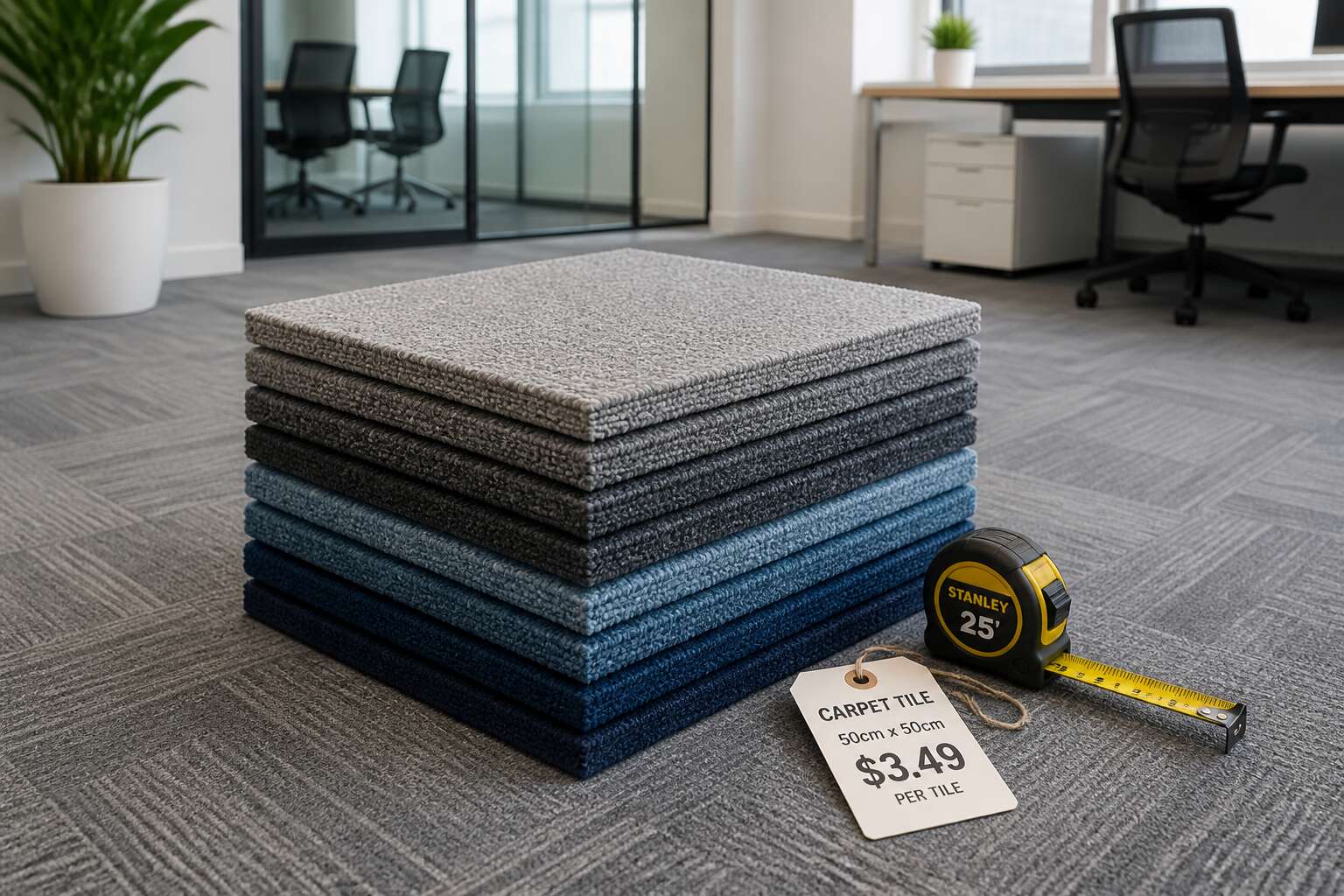
You will often see the carpet tiles rate quoted two different ways, and it can trip you up if you are not careful. Some suppliers advertise the price per square metre, a hangover from wall to wall carpeting. Others list a price per individual tile, which feels more approachable but hides the total cost.
Here is where it gets interesting. A standard 50cm by 50cm tile is a quarter of a square metre. So, if a tile costs R150, the square metre price is R600. That is a big difference to your wallet if you miss it. Before committing, always check how many tiles come in a box. You might have to buy in full boxes, which changes the final sum.
- Per tile pricing works well for small repairs.
- Per square metre pricing is better for open floor plans.
Understanding this simple distinction means the carpet tiles rate you are quoted will not leave you with a surprise bill for a half empty pallet. Ask for the rate in both measurements so you can compare apples with apples. It takes ten seconds and it saves you from a headache later.
Tiered Pricing for Commercial vs. Residential
Commercial clients often pay a lower carpet tiles rate per unit than homeowners. This is not a mystery. Volume does shift numbers, but tiered pricing also reflects different buying behavioursas. A business purchasing for a large office space negotiates directly with suppliers or distributors. A homeowner buying for a single room walks into a retail store and pays the listed price. That retail price includes overheads like showroom space and sales staff. The commercial quote skips many of those layers.
Residential projects also tend to favour specific aesthetics. Homeowners might choose a textured loop pile or a softer twist. Commercial buyers lean towards durable, low-pile constructions designed for rolling chairs and heavy foot traffic. The carpet tiles rate for these ranges can differ because the products themselves are built to different standards.
– Public sector tenders may require specific certifications, adding compliance costs.
– Hospitality projects might request custom colours or bespoke patterns, raising the rate.
– Residential orders focus on small quantities, preventing bulk economies of scale.
Understanding which tier you fall into clarifies the quote. Ask a supplier whether the carpet tiles rate applies to your project size. A commercial quote will look different from a residential one. Knowing that distinction prevents confusion when comparing estimates from different sources, especially when one quote seems unexpectedly low or high for the same tile.
Understanding Grade Levels and Pricing Tiers
In the South African flooring market, a carpet tiles rate can differ by more than 300% between the lowest and highest grade. That gap is not marketing. It is the result of standardised testing and distinct performance expectations.
Grade levels define how a tile will behave under pressure. The abrasion class, castor chair suitability, and dimensional stability all contribute. Pricing tiers follow those classifications:
- Builder’s grade for short term installations
- Standard commercial grade for daily office traffic
- Heavy duty grade for schools, clinics, and public corridors
Each tier carries its own carpet tiles rate structure. A builder’s grade tile costs less because it supports minimal wear. A heavy duty tile carries a higher rate because it must survive years of constant footfall while retaining shape. The tier also determines how long a warranty remains valid. Understanding where your project sits in this hierarchy clarifies the quote you receive.
Seasonal Promotions and Clearance Rates
A 15% to 30% shift in a carpet tiles rate often goes unnoticed if you only look at the price list. Timing matters. Suppliers in South Africa clear stock during specific cycles. January and July are the most common, as warehouses make space for new colour ranges and updated backing technologies. If your project allows for flexible scheduling, you can secure a premium tile for what a builder’s grade would normally set you back.
The catch is predictability. Clearance lines come with limited quantities. You might need 800 square metres and find only 400 available. That is where the rate breaks down. The discount no longer applies once you need to source a matching batch from a different production run. Dye lot variations become your problem. Because of that, you must weigh the saving against the risk of inconsistent colour.
Look for these signals when browsing clearance listings:
– A discontinued colour signature but the same core construction
– Short lead times on delivery, often within 48 hours
– A separate rate structure once stock falls below a defined threshold
– No option to add to the order later at the same price
These promotions respond to inventory pressure, not charity. The warehouse needs flow. A specific carpet tiles rate emerges from that pressure. When you see a deal, verify the batch number and the original specification sheet. If those match, the saving is real. If not, you are buying a compromise.
Comparing Carpet Tile Rates Across Different Materials
Nylon Carpet Tiles: Premium Performance and Price
Nylon Carpet Tiles: Premium Performance and Price
Nylon consistently commands a premium position in the carpet tiles rate hierarchy. Compared to polyester or olefin options, nylon offers superior resilience and stain resistance, justifying its higher upfront cost. In high-traffic commercial zones, this durability translates directly into long-term savings, as replacement cycles become significantly longer.
Several factors influence the final carpet tiles rate for nylon products. Density plays a crucial role; a heavier face weight often indicates a more robust tile. Additionally, the dye method, whether solution-dyed or piece-dyed, affects both colourfastness and price.
– Solution-dyed nylon offers superior fade resistance.
– It typically carries a higher rate due to the complex manufacturing process.
– This makes it ideal for sun-drenched spaces or areas with heavy UV exposure.
When weighing your options, consider the total lifecycle cost. You might pay more initially, but the extended lifespan of nylon often makes it the most economical choice over a decade of use. It is a strategic investment in the long-term appearance and value of your property.
Polyester and PET Carpet Tiles: Budget-Friendly Options
When you step away from nylon, the conversation around carpet tiles rate shifts dramatically. Polyester and PET (recycled plastic bottles) are the main budget-friendly contenders. They offer a compelling price point, often making them the go-to for residential projects or offices with lighter foot traffic. The rate of carpet tiles in this category is a fraction of premium fibres, which is the primary draw. However, the trade-off is tangible. While the initial spend is lower, these materials tend to crush under heavy furniture and show matting faster in busy corridors. They also absorb oil-based stains more readily, which is a dealbreaker for certain environments. So, the rate of carpet tiles here is purely a matter of initial affordability versus long-term performance. You get a fresh look for less, but the lifespan is noticeably shorter than nylon counterparts. For many, that upfront saving is worth the eventual replacement cost, especially in a home office or a low-traffic guest room.
Olefin (Polypropylene) Tiles: Affordable and Moisture Resistant
When you start comparing the carpet tiles rate across different polymers, olefin often emerges as the wildcard. It is frequently the least expensive option on the shelf, which makes it incredibly tempting for large-scale installations where the budget is the primary driver.
Olefin, also known as polypropylene, has a distinct advantage in specific environments. Its inherent resistance to moisture and mildew makes it a practical choice for basements, recreational rooms, or any space prone to humidity. In the South African climate, where damp winters can plague certain regions, this moisture resistance is a genuine functional benefit. Furthermore, the colour is solution-dyed, meaning the pigment is baked into the fibre itself. This makes the carpet tiles rate an attractive proposition for areas with heavy sun exposure, as the colours are less likely to fade.
However, the low carpet tiles rate for olefin does come with a compromise in tactile quality. The fibre lacks the springy resilience of nylon, so it is prone to crushing under the weight of office chairs or heavy foot traffic. It also has a higher tendency to attract and hold onto oily stains.
Consider these factors when weighing up olefin:
– The initial carpet tiles rate is unbeatable for covering large floor areas quickly.
– It offers superior performance in moisture-prone areas where wool or nylon would degrade.
– The texture is less luxurious underfoot, feeling more synthetic and flat.
For a landlord outfitting a rental property or a business kitting out a temporary office, the low carpet tiles rate for olefin is a logical financial decision. But for a homeowner wanting a durable, premium feel in a living room, the savings may be a false economy. The real question is always whether the space dictates the need for moisture resistance over physical resilience.
Wool Carpet Tiles: High-End Natural Fiber Costs
Wool carpet tiles represent the upper echelon of the carpet tiles rate spectrum, and for good reason. This natural fibre offers a resilience and tactile luxury that synthetic polymers simply cannot replicate. The carpet tiles rate for wool can be double or triple that of nylon, and the investment is substantial for any project.
However, wool is not just a premium purchase. It naturally repels dirt and resists flame, making it a safe choice for high-traffic commercial spaces and family homes alike. In the South African context, where temperature fluctuations are common, wool’s insulating properties provide a tangible comfort underfoot.
When assessing the carpet tiles rate for wool, keep in mind three key factors: the clip of the wool, the density of the pile, and the backing construction. A higher twist in the yarn means better durability. While the initial outlay is steep, the lifespan of a quality wool tile often outlasts cheaper alternatives, meaning the true cost per year of use can be competitive. For those prioritising sustainability and a premium feel, wool remains the definitive benchmark.
Recycled and Eco-Friendly Tile Pricing
Understanding the true carpet tiles rate often feels like navigating a maze. The cheapest option at the outset can become the most expensive over a building’s lifetime. Conversely, a higher price tag does not always guarantee superior performance. The market has shifted dramatically, and the rise of recycled materials has fundamentally altered the cost landscape.
When you compare the carpet tiles rate for virgin nylon against recycled PET, the difference is stark. Typically, recycled content reduces the upfront price by a significant margin, often 20% to 40%. However, this is where the comparison requires nuance. Reclaimed yarns have improved immensely, yet they still exhibit different wear characteristics than their petroleum-based counterparts. For a high-traffic retail corridor, the slightly higher cost of a solution-dyed nylon might save you from premature replacement.
The conversation becomes more compelling when evaluating eco-friendly options. The carpet tiles rate for these products includes hidden variables like carbon offsetting and closed-loop recycling programs. Here is what that pricing typically covers:
– Modular tile backing made from recycled vinyl or bio-based compounds.
– Lower VOC emissions, contributing to better indoor air quality and potential green building certification.
– The logistical cost of take-back schemes where old tiles are repurposed.
In the South African context, the import levy on certain raw materials influences the carpet tiles rate significantly. Local manufacturing is growing, which helps stabilise costs, but the durability of a recycled fibre in our high-UV climate is a critical factor. You might find that a mid-range product from a local producer offers a better balance of price and longevity than a cheaper import that fades quickly.
Ultimately, the calculation must extend beyond the initial square meter. A lower carpet tiles rate can be negated by higher maintenance costs or a shorter lifecycle. The emerging trend points toward circularity, where manufacturers retain ownership of the material. This model is altering how we perceive value, shifting the focus from the cost of acquisition to the cost of stewardship. This approach is less about the price on the tag and more about the total cost of ownership.
Luxury Vinyl vs. Carpet Tile Rate Comparison
Comparing carpet tiles rate against luxury vinyl reveals an unexpected result. Luxury vinyl often appears cheaper per square meter, but that figure hides installation and subfloor preparation costs. The rate for carpet tiles includes underlay and faster installation, which can equalize the total cost. In South Africa, humidity and UV exposure change the equation. Luxury vinyl expands and contracts with temperature swings, while carpet tiles absorb sound and hide minor floor imperfections. Consider these factors:
- Acoustic performance: carpet tiles dampen noise, luxury vinyl amplifies it.
- Comfort underfoot: carpet tiles feel warmer, luxury vinyl stays hard.
- Replacement ease: individual carpet tiles swap out, luxury vinyl requires full sections.
The true carpet tiles rate becomes competitive when you factor in lifecycle and maintenance! A cheaper luxury vinyl product may need replacement sooner in high-traffic corridors. For a balanced view, request samples and test both under your specific conditions.
Hidden Costs and Installation Expenses That Affect Total Rates
Subfloor Preparation and Leveling Fees
The sticker price on a box of carpet tiles is only the starting point of your financial journey. A seemingly attractive carpet tiles rate can quickly lose its luster once you factor in what happens beneath the surface. The existing floor often harbors imperfections, from old adhesive residue to uneven concrete screed. Ignoring these flaws is not an option, as they will telegraph through the new tiles and compromise the entire installation.
Subfloor preparation is the quiet giant in your budget. When installers arrive, they are not just laying squares; they are assessing the ground beneath. If your floor is not perfectly level, a self-leveling compound is required. This material is an additional cost, applied by the hour, and it directly impacts the final carpet tiles rate you pay per square meter.
– Removal of old flooring and carpet glue.
– Grinding down high spots and concrete bumps.
– Application of a moisture barrier or damp-proof membrane.
– Priming the surface for better adhesive bonding.
Each of these steps adds a layer of expense that is separate from the tile itself. In South Africa, where humidity and coastal climates can affect concrete slabs, a moisture test is vital. If the test fails, you face a delay and additional mitigation costs. The true picture of your total investment is only clear once you combine the product price with these preparatory laboursholiday hoursholiday. A low quote on the tiles might still lead to a higher overall project cost due to intensive floor rectification work. Always request a breakdown of preparation fees before you commit to a final number.
Adhesive, Seaming, and Accessory Costs
The advertised carpet tiles rate often excludes the actual materials that make the tiles stay put. Adhesive alone, whether pressure sensitive or wet applied, can add noticeable cost per square meter. Some installers quote the tile price without glue, then charge separately for the adhesive, its application, and clean up. Seaming tape and edge trimming are other expenses that quietly affect theinal carpet tiles rate, particularly where tiles meet doorways or transitions to vinyl or concrete.
Accessories also deserve attention. Common extras include:
– Transition strips for doorways and different floor heights.
– Aluminium edging to protect exposed tile perimeters.
– Underlay if you are floating the tiles over a smooth subfloor.
These pieces are modest individually but add up over a large office or retail space. When comparing quotes, ask whether the carpet tiles rate coversjust the square metres or the full installation package with adhesive and trims. The difference might outweigh a cheaper tile price.
Labor Charges and Regional Rate Variations
Labor charges in South Africa can inflate your carpet tiles rate faster than a Joburg traffic jam. Cape Town installers often quote premium hourly rates, while Durban tradespeople might throw in a free measure just to secure the job. Regional disparities are real, and they rarely reflect the tile quality itself.
Hidden costs lurk in every corner. Moving desks, ripping out old carpet, or hauling debris to a landfill can appear as line items after you sign. Some contractors charge per square metre, others per hour, and a few add a complexity fee for rooms with awkward angles or staircases.
- Disposal fees for old flooring materials
- Furniture moving and relocation charges
- Overtime rates for after-hours installation
These extras push the final carpet tiles rate well beyond the initial estimate. A savvy buyer in Pretoria should request a detailed regional breakdown, because the same installation might cost 40% more in Sandton than in a smaller town. Always ask for a fixed quote that includes labour, not just the tiles themselves.
Removal and Disposal of Old Flooring
The carpet under your feet has a secret past and a costly exit. When installers quote a carpet tiles rate, they rarely mention the demolition phase. Old glue, underlay and backing material must go somewhere. That somewhere has a price in South Africa. Landfill fees in Durban differ wildly from those in Pretoria, and the tipping tariff lands on your invoice either way.
Removal labour is charged by the hour or by square metre. Nobody knows the true volume of waste until the first layer peels back. Ripping up decades of adhered tile can double the projected installation timeline.
- Ask whether the quoted rate includes stripping and hauling old material
- Confirm which party arranges the landfill permits and dumping payments
- Get the disposal fee in writing before work commences
Even seasoned facility managers misjudge this expense. The carpet tiles rate you negotiate won’t hold if removal costs flex upward. Stripping and dumping fees remain the least predictable line in any flooring budget.
Custom Cutting and Pattern Matching Surcharges
Custom cutting and pattern matching are where the quoted carpet tiles rate often begins to bend. In South African installations, the grid layout rarely aligns with doorways, columns, or curved walls. Each tile that must be trimmed to fit irregular spaces introduces a surcharge that commercial estimators sometimes overlook. Pattern matching amplifies this cost further. When tiles feature directional designs or subtle weaves, installers must orient every piece precisely, which increases waste and labour time. A carpet tiles rate that assumes straight runs and identical orientation cannot account for the meticulous alignment demanded by patterned products.
For facilities in Johannesburg or Cape Town, the cost differences are tangible. Some suppliers charge a cutting fee per tile, while others invoice an hourly rate for the specialist handling the work. Pattern-matched installations often require an extra 10% of material to account for offcuts, and that hidden expense lands directly on the client. The following factors typically drive these surcharges:
- Complexity of the room geometry, including recesses and curved perimeters
- The repeat length of the tile pattern, which affects alignment flexibility
- Whether the installer must match seams across adjoining rooms
When you compare the carpet tiles rate from different suppliers, always request a breakdown for cutting and matching. Otherwise, the final invoice may exceed the initial estimate by a margin that feels unfair. Understanding these surcharges beforehand transforms an unpredictable expense into a planned line item.
Hidden Costs and Installation Expenses That Affect Total Rates: Custom Cutting and Pattern Matching Surcharges
The carpet tiles rate you see on a quotation seldom includes the meticulous work of custom cutting. South African spaces, especially older buildings in Johannesburg and Durban, rarely offer perfectly square rooms. Door frames, structural pillars, and air conditioning units force installers to slice tiles into irregular shapes. Each cut demands measurement, precision, andoften a fresh blade. That labour adds expense that standard per-square-metre pricing does not cover.
Pattern matching escalates this further. Tiles with a directional design or a repeating motif require careful orientation to maintain visual continuity across the floor. If each tile must be rotated or shifted to align, waste increases substantially. Offcuts may not be reusable, driving up material consumption. Installers may need an extra 10 to 15 percent of tiles to achieve a seamless pattern, andhat hidden cost directly inflates the project’s overall rate.
Several factors determine these surcharges:
- The complexity of the room’s layout, including curves, recesses, and odd angles
- The repeat length of the pattern, which dictates how much waste is unavoidable
- Whether seams must align across multiple rooms or corridors
Every facility manager should ask suppliers to itemise cutting and pattern matching fees when comparing carpet tiles rates. A quote that appears competitive may become the most expensive once these installation expenses surface
Long-Term Maintenance and Replacement Costs
The true cost of a flooring project extends far beyond the initial quote, and understanding where the money actually goes can save a commercial budget from unexpected strain. In the South African market, where import logistics and local installation practices vary by region, the final invoice often tells a different story than the per-square-meter price.
Waste is arguably the most significant variable that shifts the final tally. A standard estimator might calculate for five percent waste, but the reality of a complex floor plan can double that figure. Rooms with pillars, angled walls, or multiple doorways force installers to cut around obstacles, and every off-cut that cannot be reused represents pure financial loss. The shape of the space dictates this expense, not the quality of the tile itself.
Subfloor preparation is another area where the advertised carpet tiles rate rarely tells the whole truth. A concrete slab that looks perfectly smooth to the naked eye may fail a moisture test or have minor undulations that cause tiles to telegraph imperfections. Grinding, self-leveling compounds, and moisture barriers all add to the ledger before even a single tile is laid. Skipping these steps leads to premature failure, which costs far more than the preparation ever would.
Transitions between different flooring types also introduce costs that are easy to overlook. Where carpet meets tile in a bathroom or vinyl in a corridor, specialized transition strips are required. These are not universal components; they must match the height and profile of both surfaces. The hardware itself is inexpensive, but the labor to fit it correctly and the time spent measuring and cutting it adds hours to the installation timeline.
Perhaps the most underestimated factor in a commercial setting is the logistics of the job itself. Access to the building, elevator availability, and the distance from the delivery vehicle to the workspace all influence the labour price. A ground-floor warehouse with wide doors is a different proposition than a fifth-floor office in a Sandton high-rise with a freight elevator that requires booking in advance. Handling costs, whether for lifting heavy pallets or navigating narrow hallways, are rarely included in the base quote.
When comparing different suppliers, ask pointed questions about these variables. Demand a detailed breakdown that separates materials from labor and from waste allowances. Request clarity on how the installers handle obstacles and what happens to unused tiles. A lower carpet tiles rate can be misleading if the proposed waste percentage is unrealistic for your specific space. The cheapest bid is often the one that assumes a perfect, rectangular, empty room that does not exist in the real world.
Smart Strategies for Getting the Best Carpet Tile Rates
Timing Your Purchase to Seasonal Sales
In South Africa, flooring is often a compromise between durability and budget. Yet, the smartest savings are unlocked not by choosing cheaper materials, but by timing your purchase perfectly. The carpet tiles rate fluctuates throughout the year, and understanding this rhythm is your first advantage. By aligning your project with the retail calendar, you can secure premium products without straining your wallet.
The most significant opportunity arrives during the mid-year and post-December inventory clearances. Suppliers are eager to move stock to make way for new colour palettes and textures. During these specific months, the carpet tiles rate drops substantially on high-end ranges. If you are flexible with aesthetics, you can secure a top-tier product at a middle-tier price.
For business owners, the strategy involves planning. If you know a lease renewal is coming up, hold off on refurbishing until the off-season.
– Request quotes in the last week of the month.
– Negotiate installation costs during the winter lull.
– Inquire about discontinued lines for massive savings.
Timing also involves the day of the week. Many local suppliers update their pricing systems on a Monday. A Friday enquiry often yields a better rate as sales teams push to close weekly targets. Remember, the initial price is a starting point for a conversation, not a final verdict.
Ultimately, patience is the most effective tool in your procurement arsenal. Watching the market trends ensures you are not paying a premium for urgency. When you finally make the move, you will secure a durable, beautiful floor and the satisfaction of knowing your Rand was spent at the exact right moment.
Requesting Samples and Negotiating with Suppliers
A single request for samples can reveal more than any brochure. When you hold a tile, inspect the edges, the backing density, the way it flexes. That physical knowledge lets you pivot the conversation into real negotiation, because the carpet tiles rate hinges on perceived value. Suppliers rarely move on price for someone who seems indecisive.
Lean on deadstock and recent overruns. I have found that many warehouses hold unsold lots from cancelled projects, and they would rather offload them than pay storage.
- Ask for a rate on full pallets
- Request a discount for multiple showroom samples
- Offer to write a quick testimonial
Then, when you have a quote, test it against a second supplier. A simple comparison forces both to sharpen their figures. The carpet tiles rate is a starting point, not a contract!
Leveraging Bulk Orders and Trade Discounts
We know the published carpet tiles rate is rarely the final word. In South Africa, the margin between a quoted price and a secured deal often rests on how you present your procurement strategy. Bulk volume is the most persuasive language a buyer can speak.
Businesses that commit to a specific square metre footprint, or negotiate a phased delivery schedule on a single order, shift leverage to their side. The supplier absorbs warehousing costs and secures cash flow. In exchange, you should demand a rate that reflects that security.
– Consolidate all project phases into one master order
– Negotiate transit costs from major hubs like Johannesburg or Durban
– Ask for a rate that includes a margin of extra tiles for future repairs
Showrooms hold stock for a reason. Empty racks cost them money. When you approach them with a vision for a full fitout, they often reveal a carpet tiles rate that rewards decisive action. It is nuance, not pressure, that builds a profitable outcome.
Choosing Standard Sizes and Patterns to Cut Costs
Standard tiles carry an unfussy dignity. A bespoke dimension demands extra cutting, extra labour, and a higher carpet tiles rate. The factory floor prefers repetition. When you choose a common size, the production line runs uninterrupted, and the saving passes to you.
Patterns hold the same logic. A plain grid or a subtle fleck becomes a bargain. Elaborate designs require alignment, more waste, and skilled hands. The rate climbs quietly.
Consider these simple choices:
- Square tiles in 50cm or 60cm formats
- Straight-lay or quarter-turn installation
- Patterns that repeat without matching
Each decision strips complexity from the quote. For a South African fitout, standardisation keeps the budget steady. The floor still performs, without inflating the price.
Comparing Online Retailers vs. Local Dealers
Calculating Total Cost of Ownership, Not Just Upfront Rate
The true cost of a floor reveals itself in the years after installation, not merely at the point of sale. Many buyers focus solely on the initial carpet tiles rate, only to face unexpected expenses from premature wear or difficult maintenance. A smarter approach weighs the long-term implications of every rand spent. This means looking beyond the price tag to consider the specific demands of your space.
High-traffic commercial zones require a product engineered for resilience, while a quiet home office might prioritise comfort and aesthetic appeal. Value comes from matching the product to its environment, ensuring you are not paying for unnecessary durability or, conversely, replacing a worn-out floor far too soon.
Consider these factors to assess the real investment:
– Underfoot comfort and acoustic properties
– The ease of spot cleaning and stain resistance
– The manufacturer’s warranty and expected lifespan
Ultimately, the best decision balances immediate budget constraints with future performance. A slightly higher initial rate often translates to a lower total cost of ownership when you factor in reduced replacement frequency and lower cleaning expenses. Viewing your floor as a long-term asset, rather than a simple purchase, clarifies the true measure of its worth.
Regional and Industry Variations in Carpet Tile Pricing
How Geographic Location Impacts Shipping and Taxes
In South Africa, the carpet tiles rate can fluctuate noticeably based on where you are located. A buyer in Cape Town faces different logistics than one in Johannesburg, and this tension has a direct impact on the final cost per square meter. Coastal provinces benefit from proximity to major ports, which reduces freight expenses for imported tiles. Conversely, inland cities like Pretoria or Bloemfontein seen higher transport fees, as distributors pass along the cost of moving heavy pallets over long distances by road. These shipping expenses are not trivial; they can add several rands per tile, tipping a budget-friendly option into a mid-range one.
Beyond transport, industry type plays a decisive role in pricing variations. The carpet tiles rate for a corporate office with low foot traffic will differ from that for a school corridor or a hospital ward. Commercial sectors with stringent safety or hygiene standards often require tiles with specialized backing or antimicrobial treatments, which naturally command a higher price.
– Distance from the point of manufacture or import hub
– Tariff classifications and customs duties on specific tile materials
– Provincial tax rates and local levies
– Delivery logistics, including access to loading docks or elevators
These factors intertwine, creating a pricing landscape that is far from uniform across the country. A retail chain in Durban may secure a lower carpet tiles rate than a similar operation in Polokwane, despite ordering the same volume and grade. For those planning a large-scale project, it is wise to request a detailed quote that includes all shipping and tax components, since the published rate per tile rarely reflects the true landed cost. This regional complexity underscores why a single national price list cannot exist for such a varied product.
Commercial Project Rates vs. Residential Renovation Rates
Most people assume carpet tiles cost the same everywhere. They don’t. Far from it. The carpet tiles rate you see advertised often tells only half the story. The other half depends heavily on who you are and where your project sits on the map.
Take industry type first. A corporate office with moderate foot traffic will pay a different price than a school corridor enduring daily scuffing. Hospitals and cleanrooms demand tiles with antimicrobial properties and stricter fire ratings. Those specifications push the price upward. From my experience, specifying for a healthcare facility can increase your final carpet tiles rate by 15% to 25% compared to a standard commercial spec. Retail spaces also skew higher, as aesthetics and durability must align perfectly.
Regional variations are equally dramatic. Consider the cost of living and local demand in your province. Johannesburg often sees competitive pricing due to high supplier density. Cape Town, while vibrant, can carry slightly higher transport surcharges. Meanwhile, smaller towns in the Northern Cape or Free State frequently face elevated rates, as stock must travel further. This geographic spread creates a patchwork of pricing that can shift by the rand per square metre.
Here is a quick breakdown of how the context changes the number:
– Corporate offices (standard usage): baseline pricing
– Educational institutions: moderate upcharge for high-traffic backing
– Healthcare facilities: significant premium for antimicrobial and safety features
– Hospitality venues: premium for luxury aesthetics and bespoke designs
One thing remains consistent.
Government and Institutional Contract Pricing
Government and institutional contracts follow a different arithmetic. Tenders often lock in a carpet tiles rate for the full fiscal year, shielding public buyers from raw material swings. That stability comes with conditions. Municipalities in Gauteng or the Western Cape may aggregate demand across departments, and one consolidated order can trim the unit price by 8% to 12%.
Schools and public hospitals face the opposite pressure. Budget cycles force them to accept the lowest compliant tender, which often excludes antimicrobial backing or heavy-duty wear layers. Compliance costs quietly push the effective rate upward, even when the quoted figure looks modest.
Supplier density matters too. A Cape Town hospital might see competitive bids from three local distributors, while a Free State municipality entertains one. That scarcity shifts the negotiated carpet tiles rate in ways that never appear on a published price list.
Impact of Local Demand and Supply on Rate Fluctuations
In Durban, the carpet tiles rate responds to humidity and port traffic. Coastal air accelerates adhesive curing, shortening installation windows and forcing contractors to quote higher. Inland, Johannesburg’s dense distribution network keeps supply tight yet competitive, though delivery delays from the coast add hidden costs. Smaller towns in the Eastern Cape face the opposite problem, with fewer stockists translating directly into higher quotes.
A single factory shutdown in KwaZulu-Natal can disrupt supply nationwide. When local mills stall, distributors import from China or Europe, and freight costs alter the carpet tiles rate within weeks. The gap between coastal and inland pricing rarely appears in national price lists.
Industry demand shifts pricing unevenly:
- Sandton corporate refurbishments order premium nylon in volume, which steadies the rate.
- North West mining towns buy small lots of olefin, so their per-unit cost climbs.
- Cape Town tourism renovations create seasonal spikes every summer.

0 Comments