Benefits of Compact Carpet Squares
Space Efficiency and Installation Flexibility
A single square metre of prime office real estate in Cape Town can cost more per month than the tiles under your feet. That explains the rising appeal of modular flooring. Carpet tiles 30cm fit into narrow corridors, odd corners, and cramped server rooms without the cutting waste typical of larger planks. I once watched a technician replace one damaged tile in five minutes, no adhesive mess, no disruption.
This installation flexibility extends beyond repairs. Compact squares allow you to work around fixed furniture, cable troughs, and access panels with ease. The practical benefits multiply:
– Lift a single tile to reach underfloor wiring
– Swap out one stained square instead of an entire roll
– Rearrange or rotate tiles to spread wear evenly
Space efficiency also shows up in logistics. These small tiles stack tightly, so a standard delivery van carries enough for several rooms. That means less storage space and quicker turnaround on renovation projects.
Design Versatility in Small Modules
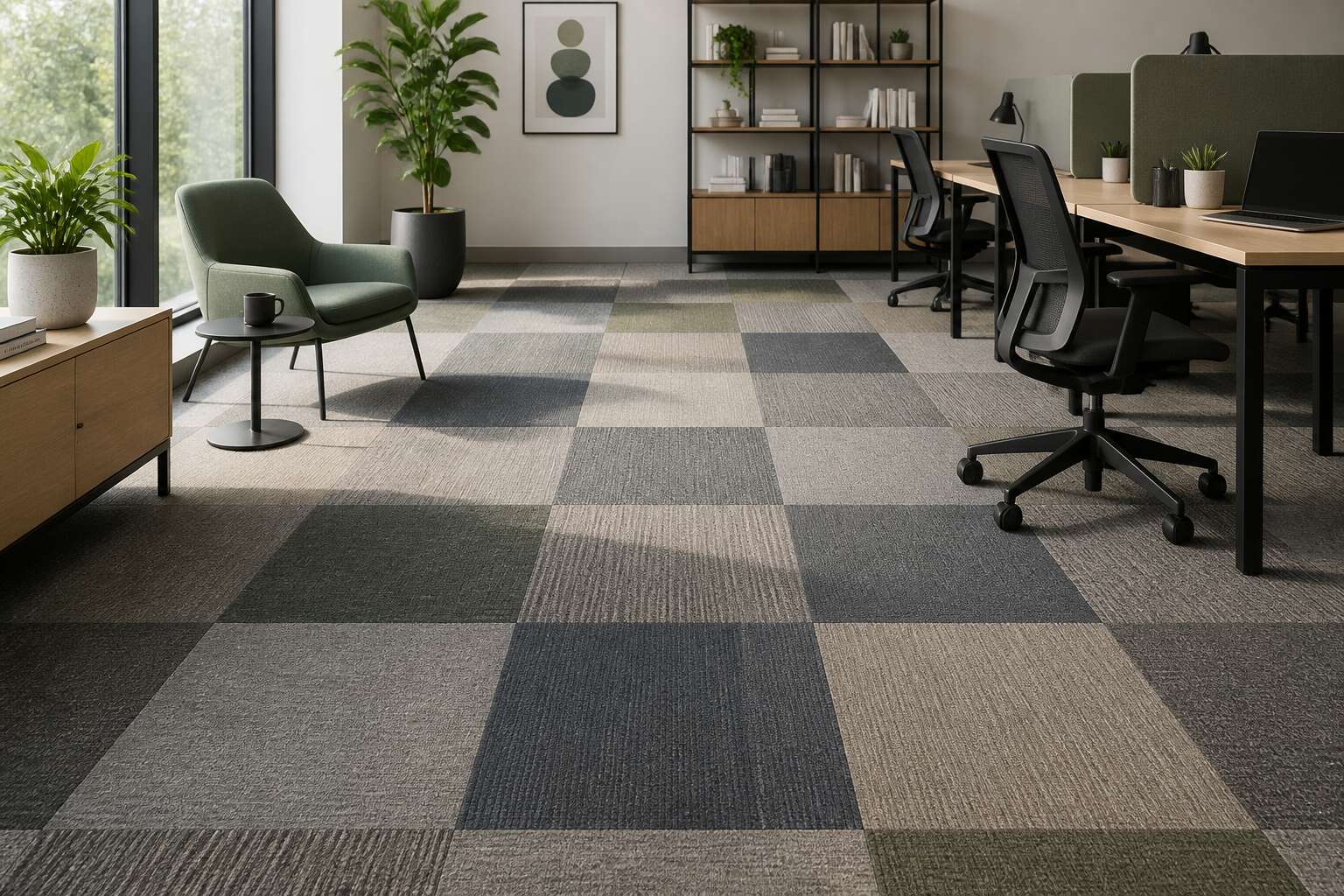
Carpet tiles 30cm produce design patterns that larger formats cannot achieve. Checkerboards, diagonal sweeps, and subtle tonal shifts all become possible without cutting a single square. I have watched a designer blend two colours to define a reception area directly on site.
The modular scale also simplifies future changes. Because the modules are compact, you can replace a portion of the floor when your brand palette evolves. This is how design flexibility translates into budget control.
For a typical office floor I have worked on:
- Use 60cm alternating blocks for a strong graphic effect.
- Keep single colour in quiet zones for visual calm.
- Mix textures within the same height to add depth.
Every module remains a deliberate choice, not a compromise.
Cost-Effectiveness for DIY Projects
The real beauty of carpet tiles 30cm shows up in your budget. Because these squares are compact, you can buy exactly as many as you need. No wasted rolls, no expensive offcuts. I have seen DIY enthusiasts transform a home office for under R1,500. The small size keeps the price per square approachable.
The savings appear in three ways:
- Transport is easier when boxes fit in a sedan.
- Cutting errors cost only a single square.
- Future replacements happen without a full overhaul.
With carpet tiles 30cm, every rand works harder. This is cost control that wall to wall carpet cannot offer.
Maintenance and Replacement Advantages
Spills happen. Coffee, wine, or whatever the cat dragged in. With carpet tiles 30cm, you don’t need to call in a professional or live with a stain that mocks you daily. Simply lift the offending square and swap in a fresh one. The rest of the floor stays untouched.
Replacement is where these compact squares shine. A damaged tile costs a few rand to replace, not a full room redo. Keep a spare box in the garage and you’re covered for years.
Here’s what maintenance looks like in practice:
– Spot clean individual tiles without disrupting neighbours
– Rotate high traffic squares to distribute wear evenly
– Replace one tile without matching dye lots across a whole room
The modular nature of carpet tiles 30cm means your floor ages gracefully, one square at a time.
Key Considerations Before Purchasing
Material and Backing Options
One third of a metre transforms a floor into a mosaic of practical choices. For carpet tiles 30cm, the face fiber often outweighs appearance. Nylon, for instance, survives heavy footsteps with minimal flattening. Polyester feels softer but dulls quicker. Wool adds warmth yet comes at a premium. These differences shift the final cost.
Backing options deserve equal scrutiny. Bitumen provides a firm, economical base. PVC handles damp environments without bulging. Polyurethane delivers acoustic comfort, though it costs more.
- Assess the subfloor’s condition before matching any backing
- Check the release adhesive’s compatibility with the chosen material
- Verify the tile’s flammability rating for your region
When you select carpet tiles 30cm, remember that the backing influences installation on heated floors. Rubber and felt variants react differently to thermal cycles. For South African homes, a moisture barrier backing often prevents mold during humid summers. The right combination makes your investment last decades.
Durability and Traffic Ratings
Traffic ratings receive less attention than they deserve, yet they determine how gracefully your floor ages. A domestic hallway and a boutique fitting room impose different demands on carpet tiles 30cm. The rating system, expressed in numbers like 21, 22, or 33, classifies residential and commercial use precisely.
Consider the walker count. Heavy traffic spaces need a denser pile construction. Lighter areas allow more textured loops. Abrasion resistance matters more than thickness. I have seen offices where the rating was chosen for the price rather than the footfall.
- Class 21 suits bedrooms and low-traffic homes
- Class 22 covers living areas and stairs
- Class 33 handles offices, shops, and corridors
South African conditions, with sand and grit tracking through doorways, can accelerate wear. For carpet tiles 30cm, a rating that exceeds the actual usage by a comfortable margin proves worthwhile. The extra cost is modest when compared against early replacement.
Color and Pattern Coordination
Color coordination with carpet tiles 30cm is a game of long-term commitments, not fleeting whims. That showroom shade of burnt orange might charm you in February, but it must tolerate your furniture’s evolution. In South Africa, where natural light ranges from Durban’s muggy brightness to Cape Town’s fierce glare, pattern choice alters a room’s perceived warmth completely.
Consider how the layout shapes visual flow. Herringbone draws attention; solid colors recede. Heavily patterned carpet tiles 30cm disguise the unavoidable sand conquering your doorway, yet they can overcrowd a compact space. Plain tiles reveal every footprint, demanding devotion. I have watched homeowners choose a grid layout expecting uniformity, only to discover the pattern repeats create an optical illusion worthy of an art gallery.
Underfloor Heating Compatibility
Underfloor heating demands a floor covering that transmits warmth without resistance. Carpet tiles 30cm with a combined thermal resistance above 2.5 tog trap heat beneath the surface, forcing the system to work harder and inflating your energy bill. In South Africa, where electricity prices climb yearly, this becomes a permanent cost.
The 30cm module complicates matters. Smaller tiles mean more seams, and more seams mean more adhesive. Certain adhesives act as insulators, dulling the heat before it reaches your feet. I have seen installation guides specify a full spread of glue rather than dots, precisely because air pockets create cold zones.
- The tog value should be confirmed with the manufacturer before purchase
- The recommended adhesive must permit heat conduction through the tile
- The backing needs to tolerate sustained floor temperatures around 27°C
Warmth rises through the tile at different rates depending on fibre density. A stable structure distributes heat evenly across the surface, avoiding those uncomfortable hot spots near heating coils.
Acoustic and Insulation Properties
Footstep noise is the most common complaint in multi storey buildings across South Africa. Concrete floors transmit sound efficiently. Carpet tiles 30cm offer a particular acoustic advantage, because their dense fibre structure absorbs impact sound more effectively than larger formats. The seams, often considered a drawback, actually create air pockets that scatter sound waves.
Thermal insulation, however, works differently! The same density that deadens noise also traps warmth. A room with carpet tiles 30cm requires less heating during Johannesburg winters. Yet this insulation value depends heavily on the backing material. Rubber backings resist heat transfer, while felt or foam backings strike a balance between comfort and conductivity.
- Tile density determines sound absorption ratings
- Backing thickness influences thermal insulation
- Installation pattern affects overall performance
The acoustic rating determines the outcome. A 30cm tile with heavy weight outperforms lighter options in noise reduction and heat retention.
Installation Techniques for Small Tiles
Preparing the Subfloor
There is a reason subfloor preparation separates triumphant DIYers from those who spend a weekend peeling adhesive off their socks. For carpet tiles 30cm, the surface must be flat, clean, and dry. A concrete slab in Johannesburg often hides moisture, so test it with plastic sheeting first. Uneven spots? Use self leveling compound. Damp issues? Seal the floor before laying.
Without that base, every tile becomes a tiny monument to regret. Check the substrate thoroughly:
– Sweep and vacuum all dust.
– Fill cracks wider than 2mm.
– Sand down any high patches.
Installation flexibility only works when the floor underneath behaves. Small tiles demand precision, yet they forgive minor mistakes if the subfloor is honest. Rush this step, and you will learn why levelling compound exists. Take the hour. Your knees will thank you later.
Adhesive vs. Peel-and-Stick Methods
Installing carpet tiles 30cm is where patience meets payoff, and your choice of adhesive determines the entire character of the project. Peel and stick options charm the casual renovator with their convenience. You peel, you press, you move on with your life. These tiles suit a home office in Durban where humidity might mock less forgiving materials.
The traditional wet adhesive method offers permanence, which is either reassuring or terrifying depending on your confidence. Most professionals prefer pressure sensitive adhesive for carpet tiles 30cm because it allows repositioning during installation. The floor remains workable for roughly twenty minutes.
– Spread adhesive with a notched trowel, working in sections
– Press each tile into place, then roll the surface with a weighted roller
– Allow twenty four hours before moving furniture across the floor
Peel and stick tiles demand a perfectly level surface, while wet adhesive forgives minor imperfections in the substrate. Choose peel and stick for small accent areas or rental properties. Choose liquid adhesive for rooms where furniture stays put. Either method respects the modular nature of carpet tiles 30cm, yet they demand different levels of commitment from the installer.
Laying Patterns and Layout Planning
The difference between a mediocre installation and a striking one is decided before the first tile is laid. In my experience, the layout deserves quiet deliberation. A 30cm module rewards precision; once the first row commits, every subsequent tile answers to it. Start by measuring the room’s centre points, then dry lay a cross of carpet tiles 30cm from the midpoint outward. This reveals awkward cuts at the perimeter before they become permanent.
For larger rooms, consider a quarter turn pattern, where adjacent tiles rotate 90 degrees, creating a checkerboard effect that hides slight dimension variances. The brick bond, offset by half a tile, suits corridors. Carpet tiles 30cm in a herringbone arrangement create a satisfying visual tempo in narrow spaces.
- The room is only square if both diagonals measure the same
- Reference lines should run perpendicular through the centre
- Cuts belong against the least visible wall
Avoid forcing a pattern that fights the room’s geometry.
Cutting and Trimming for Edges
Cutting carpet tiles 30cm to fit perimeter edges demands a fresh blade and a metal straight edge. Score the backing with firm pressure on the first pass. Fold along the scored line, then shear the pile from the top. For door casings and architraves, scribe the profile onto the tile and trim in small increments.
This modular size simplifies edge work. Adjacent cuts rarely align, so each tile demands individual measurement. For carpet tiles 30cm, mark the face downward and cut from the backing into the pile. A hot knife glides through rubber backing. A hooked utility blade suits bitumen. Replace dull blades without hesitation!
- Cut from the pile side when trimming visible contours
- Leave a 3mm gap at walls for natural expansion
- Number each cut tile to match its position
Dry fit every trimmed piece before committing adhesive. Small offcuts become fillers under desks or inside cupboards. Plan cuts across adjoining tiles to reduce waste and keep the layout intact.
Common Mistakes to Avoid
Carpet tiles 30cm punish haste. The backing must sit flush, so spread adhesive with a trowel leaving uniform ridges. Too much glue squeezes up through the seams, and once that happens, dust forms a permanent dark line.
Even pressure matters. Press each tile from the centre outward using a weighted roller. If you skip this, trapped air creates bubbles that click underfoot. That sound is the tile separating from the floor, and it only gets louder.
- Do not back butter the edges. It creates humps.
- Do not force tiles together. Thermal movement needs a hairline gap.
- Do not walk on freshly laid panels too soon. The adhesive needs time to grab.
Measure twice before the glue goes down. For carpet tiles 30cm, a misplaced tile affects every adjacent row. Check the grid line with a chalk string after every third row, and fix misalignment immediately. Once the adhesive cures, no force will shift that tile cleanly.
Creative Applications and Design Ideas
Residential Spaces: Bedrooms and Home Offices
We spend a third of each day in bedrooms and home offices, yet flooring often feels like an afterthought. Carpet tiles 30cm offer a way to reclaim that ignored surface. I have watched clients build a calm sleep corner with muted earth tones, then mark a vanity area with a single accent panel.
In a home office, tile placement can separate a video call backdrop from a drafting table, creating clear functional zones. The modular size invites you to treat your floor as an evolving surface. Swap a single tile when your mood shifts, or add a new section to accommodate a growing work station!
Commercial Environments: Retail and Hospitality
A retail floor is a silent salesperson. The scale of carpet tiles 30cm creates a canvas for guiding movement without saying a word. In a boutique, a bold, geometric arrangement can shepherd customers toward a new season’s display. A contrasting border in a darker shade defines the fitting room zone. This granular control allows you to test visual thresholds. You can shift a design motif for a holiday promotion, then revert to the standard pattern with minimal fuss. The floor becomes a flexible tool for narrative.
Hospitality spaces demand versatility from every surface. A hotel lobby transitions from morning coffee rush to evening quiet. Modular flooring adapts to these shifting moods. You can break up a vast reception area into intimate seating islands using tonal variations. For high traffic paths, this product offers a simple solution.
– Replace only the worn tiles in front of the lift.
– Mix a denser pattern to visually slow down foot traffic near the bar.
– Use a neutral field to make the architectural details stand out.
Guest rooms benefit from the acoustic comfort and the easy maintenance. When a spill happens, you lift a single module. The speed of repair reduces downtime, a critical factor for occupancy rates. This is not about durability alone; it is about operational agility. Every square meter of carpet tiles 30cm contributes to a composed, functional environment that keeps pace with daily rhythms.
Accent Walls and Mixed-Media Installations
Accent walls have moved beyond paint and timber. Carpet tiles 30cm now climb vertical surfaces in Johannesburg homes and Cape Town studios, creating a soft, textured backdrop for a headboard or a gallery wall. The modular scale makes installation achievable without a specialist. When paired with metal or glass, the contrast gives a room a tactile dimension.
Consider these placements:
– A single column of tiles behind a desk, framing a work zone with acoustic warmth.
– A recessed niche lined in charcoal tiles, holding a sculpture or a stack of books.
Mixed-media installations work because the grid of carpet tiles 30cm offers a predictable pattern. You can cut around a light switch, a window frame, or an existing mural without committing to a full room. This is pragmatic creativity. The floor is no longer the only canvas.
Using Tiles to Define Zones in Open-Plan Areas
Open-plan living in Joburg often becomes one loud, undefined space. Carpet tiles 30cm can carve a reading corner from a dining room without building a wall. The grid gives you a visual boundary! Lay a burnt orange patch under a lounge chair. Add a neutral field around it. The tiles sit flush, so the transition is tactile, not abrupt.
For a studio, define the work zone with a darker square. The eye follows the pattern shift. Consider these placements:
- A charcoal cluster for the desk area.
- A terracotta strip along the kitchen pass.
- A soft grey rectangle for the sofa.
Each zone gets its own texture. Use the same 30cm module to align boundaries with furniture legs. That precision makes the space feel intentional.
Care and Longevity of Modular Flooring
Routine Cleaning and Vacuuming
Modular flooring demands a consistent cleaning rhythm. Dust settles into the fibers of carpet tiles 30cm faster than you might expect. A weekly vacuum pass keeps the surface crisp and prevents grit from grinding into the pile. South African homes with sandy soils require extra attention at entryways.
The backing resists moisture, but pooled liquids can weaken adhesives over time. Blot spills immediately with a dry cloth. Use low moisture methods for deeper cleaning. Over-saturating the tiles risks damage to the subfloor beneath.
Vacuum attachments with a brush head work best for the textured surface of these tiles. Varied cleaning patterns prevent the pile from flattening in heavily used lanes. This habit preserves the original look for years.
Spot Removal and Stain Treatment
Spills on carpet tiles 30cm demand a steady hand. The moment a stain lands, reach for a dry cloth and absorb the excess. Rubbing spreads the pigment into the weave. Instead, press firmly and lift. For wine or tea, a solution of mild detergent and lukewarm water often breaks down the residue. Always test on a hidden corner first. Here is a practical sequence for stubborn marks:
1. Blot the area with paper towels until no color transfers.
2. Apply a small amount of cleaning solution to a white cloth.
3. Work from the outer ring inward to avoid enlarging the stain.
4. Pat dry with a clean towel and allow the tile to air.
The backing resists water, but prolonged saturation weakens the bond. Acidic spills, like citrus or vinegar, can etch the backing if left unattended. For oily residues, sprinkle cornstarch on the spot and let it sit for fifteen minutes before vacuuming. This simple act lifts the grease without harsh chemicals. With consistent attention, the tiles maintain their appearance and your floor avoids premature wear.
Replacing Damaged Tiles
A damaged tile does not force the whole floor into early replacement. With carpet tiles 30cm, you lift the offending module and slide in a fresh one. The surrounding grid stays put, and the floor resumes its original arrangement. I have replaced several in a high traffic hallway without anyone noticing the swap.
The preparation matters. Store spare tiles from the original installation in a dark, dry place. Sunlight alters dye over months, so extra modules from the same batch keep the colour uniform. When a tile fails, check the backing for crumbling adhesive before you press it down.
Rotation extends longevity. Tiles moved from sunny corners into shaded rooms every few years allow fading to even out. This habit multiplies the serviceable life of modular flooring.
Extending Lifespan Through Rotation
Rotating carpet tiles 30cm is a deliberate practice that yields a longer service life. Over a few years, sunlight and foot traffic create uneven wear. Swapping modules between sunny windows and shaded corners allows the colour to settle uniformly, since each tile ages differently by position.
To manage this, label the underside of each module with a pencil mark. Then, follow a simple schedule:
- Move bright areas into darker rooms every six months.
- Shift high traffic tiles toward quieter zones annually.
- Keep a record of each rotation to track exposure.
This habit preserves visual continuity. Carpet tiles 30cm stay flat because the backing remains intact through repeated lifting. Clean adhesive residue before repositioning, as old sealants reduce grip. Gentle rotation reduces the need for early replacement, saving resources and time.


0 Comments