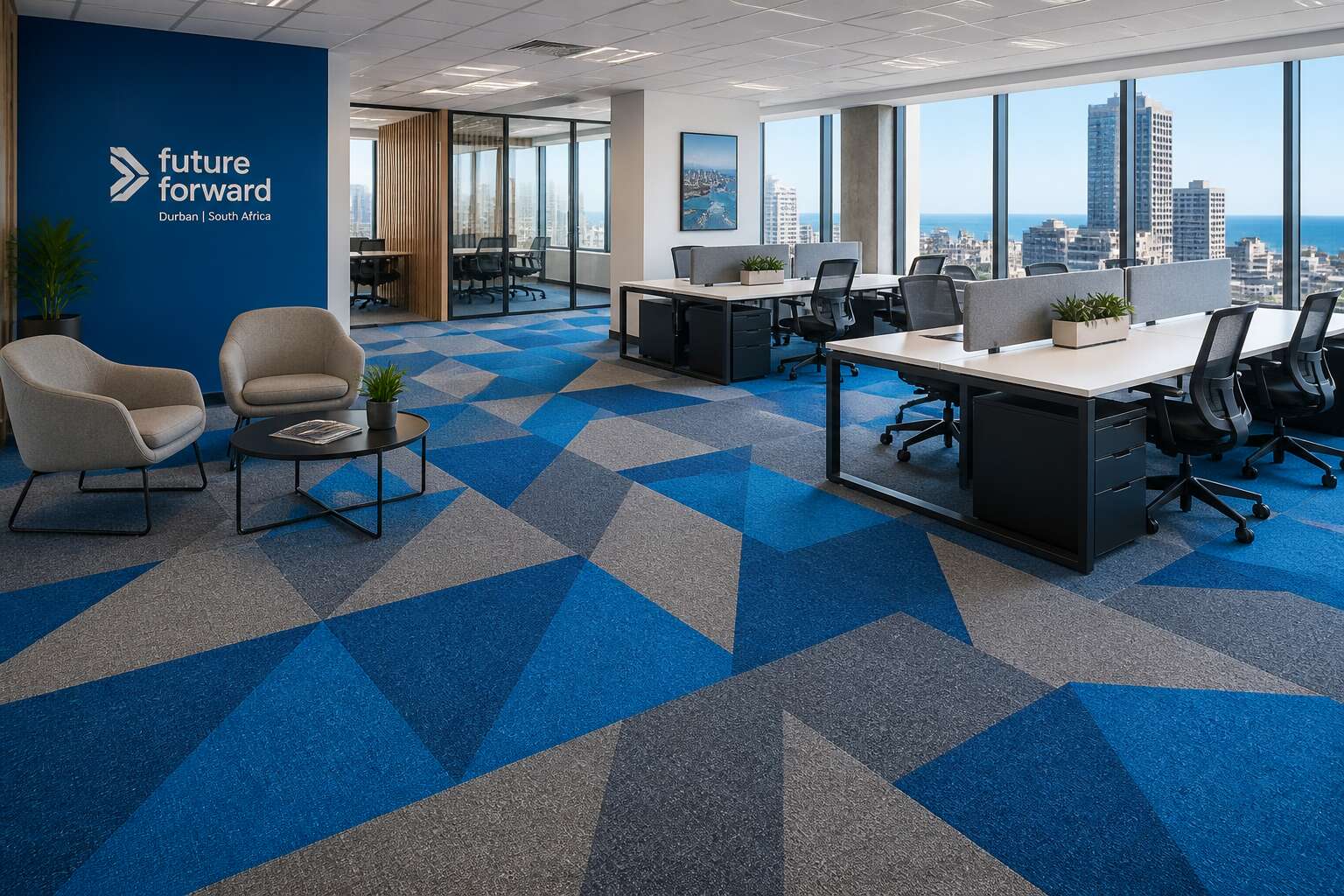
Why Carpet Tiles Are the Smart Flooring Choice in Durban
Coastal Humidity and Mold Resistance
Durban’s air carries salt and moisture. This constant humidity wreaks havoc on standard flooring. Hard surfaces become slick hazards, and broadloom carpets turn into sponges for damp odours. Carpet tiles durban are engineered for this specific environment. Their backing systems are built to resist water intrusion, preventing the swelling and delamination seen in other products. Moisture does not pool on the surface, and that is a critical advantage for any coastal home or office.
The secret lies in their construction. These tiles are not a single piece of fabric, but a series of independent squares. Each one can be lifted and inspected. You can dry them, clean them, or simply replace a single tile if a spill seeps through. This modular design offers a direct defence against fungal growth. Here is what that means for your space:
– The tight weave prevents mould spores from settling deep in the pile.
– The rubber or PVC backing acts as a vapour barrier.
– Individual tiles ventilate faster than wall to wall carpet.
Mold needs organic material and stagnant water to thrive. Carpet tiles deny it both. The materials are often synthetic, offering no food source for bacteria. The grout lines between squares allow air to circulate beneath the fabric, which is a feature you will not get with standard carpeting. For businesses and residents in the city, this means a floor that remains hygienic and fresh. You gain the comfort of textile underfoot without the constant worry of a damp, musty interior. It is a practical, long lasting solution for the subtropical weather.
Cost-Effective Installation and Replacement
When you weigh the long-term costs of flooring in a coastal city, the financial logic of carpet tiles durban becomes unmistakable. Replacing a single stained or damaged tile is a five-minute job, not a full-room renovation. That alone saves businesses and homeowners thousands of rand over the lifespan of the floor, especially when compared to the inevitable, costly replacement of wall-to-wall carpeting.
The installation process itself is another area where you save. There is no need for permanent adhesives or specialized stretching equipment. Most tiles use a simple peel-and-stick backing or a loose-lay system, which means a competent DIYer can handle a room over a weekend. If you hire a professional, the labour cost is significantly lower because the work progresses quickly and without the mess of traditional carpet glue.
Consider the practical advantages that translate directly into savings:
– Damaged sections are replaced individually, never in bulk.
– Access to subflooring or underfloor cabling is effortless.
– The modular nature allows you to rotate tiles and distribute wear evenly.
This flexibility means your initial investment in carpet tiles durban continues to protect your budget long after the installation is complete. For busy offices and family homes in Durban’s humid climate, it is a durable, sensible choice that doesn’t sacrifice comfort for cost.
Aesthetic Versatility for Modern Homes and Offices
They say the devil is in the details, but in Durban, the personality is in the pattern. Choosing a floor should not be a monologue of beige, yet wall to wall carpeting often forces you into that exact conversation. Carpet tiles durban offer a visual vocabulary that broadloom simply cannot match. You are no longer restricted to one roll of colour that dictates your entire room’s mood. Instead, you can mix, match, and create a mosaic that reflects a coastal vibe or a corporate edge with equal ease.
This modular approach allows for a design language that is both dynamic and deliberate. For an office, you can use different shades to create wayfinding cues or to delineate collaborative zones from quiet work areas. For a home, the possibilities are even more playful. You could frame a seating area with a contrasting border or create a checkerboard effect that adds a touch of whimsy to a study.
– Mixing bold hues with neutral tones for a custom look.
– Using patterns to mimic a runner or an area rug.
– Creating a logo or monogram right in the floor of a reception area.
The visual texture also works in your favour. By layering tiles with different pile heights or patterns, you add depth without the bulk of an actual rug. It is a clever way to add dimension to a room that remains easy to clean and maintain. A floor should be a conversation starter, not a silence inducer. Carpet tiles durban let your space speak with a distinctive voice, proving that practical flooring does not have to be visually monotonous.
Popular Types of Carpet Tiles Available in Durban
Dense Loop Pile Tiles for High Traffic
Dense loop pile tiles are engineered for busy lobbies and long hallways. Their low profile and tightly closed loops resist the flattening that softer carpets often experience. For carpet tiles Durban property managers select, this durability translates into fewer replacements.
A short list of their practical strengths:
- Handle rolling chairs and constant foot traffic without fraying
- Maintain their shape under heavy furniture
- Simplify maintenance since loose dirt sits on top
The dense loops also mask daily wear, so those high traffic zones retain a sharp look. I find that this makes them a sensible choice for any office layout!
Plush Cut Pile Tiles for Luxury
Most people underestimate how much the texture underfoot changes a room’s character. Plush cut pile tiles offer a different experience entirely compared to the dense loops we just covered. The fibers are cut, not looped, which creates a soft, velvety surface that feels almost like a deep-pile carpet, but in a practical tile format. For a boardroom or an executive office, this adds a layer of quiet sophistication that hard surfaces simply cannot match.
This type of flooring absorbs sound effectively, which is a genuine benefit in open-plan areas where conversations and phone calls overlap. It also provides a warmer, more inviting atmosphere. The plush texture gives a space a sense of calm, which is often the goal for client-facing areas where you want people to feel comfortable and relaxed.
The tactile benefits are easy to appreciate:
– The cut fibers create a smooth, even surface that feels soft underfoot.
– The dense pile offers a subtle, luxurious sheen that catches light.
– Plush tiles provide a high level of acoustic insulation, reducing echo.
– The cushioning effect reduces fatigue for employees who stand for long periods.
Selecting carpet tiles Durban businesses use for these spaces is straightforward when you focus on the pile height and density. A higher density plush tile will resist crushing from chair castors, while still offering that premium feel. It is a balancing act between the softness you want and the durability you need, but modern manufacturing has made this possible without compromise. The result is a floor that feels personal and polished, which is exactly the message a well-appointed office should send.
Custom Printed and Patterned Tiles
Custom printing has changed how Durban businesses approach flooring. Local suppliers now offer carpet tiles Durban companies can order with exact logo, brand colors, or artistic designs. This moves beyond generic office carpet into a statement that reinforces identity. The technology supports prototypes and small batch runs, so even a single boardroom can be transformed without a full warehouse order.
Patterned tiles offer an alternative route. They simulate natural textures like stone or wood, or present geometric patterns that add rhythm to a corridor. Some designs use a clever visual trick: alternating square tiles create a woven effect without extra installation cost. Let me say, the range available in Durban gives designers tools that were once reserved for luxury hotels.
- Custom printed logo tiles for reception areas
- Geometric patterned tiles for breakaway zones
- Textured lookalikes for open plan spaces
Both options allow creative freedom while keeping the practical benefits of modular flooring.
Sustainable and Recycled Material Options
Durban’s plastic waste problem is not abstract. The city generates thousands of tons of it each year, and a growing portion now ends up in modular flooring. Sustainable carpet tiles Durban suppliers stock are often made from recycled PET yarn, which comes from discarded plastic bottles. The bottles are cleaned, shredded, and spun into fiber that performs as well as virgin nylon. It is a closed loop that keeps waste out of landfills and turns it into something durable. The technology exists. The supply chains are active. The choice is simply whether to opt in.
Recycled content is not the only green angle. Some manufacturers now produce carpet tiles Durban offices can specify with bio-based backing materials, reducing the reliance on bitumen. Others use water-based inks and low-VOC adhesives, which improve indoor air quality. For companies pursuing green building certifications, these details carry weight.
Common sustainable options include:
– PET felt tiles made from recycled bottles
– Cushioned backing tiles with recycled foam content
– Cradle to Cradle certified products with take-back programs
The performance of these tiles has improved significantly. Early recycled options were prone to wear, but modern manufacturing has closed that gap. That means Durban businesses can meet sustainability targets without sacrificing longevity. The tiles handle rolling chairs, foot traffic, and the coastal climate. They also cost about the same as standard commercial grades, which removes the final barrier. Most local suppliers carry stock, and lead times are short. The only real question is how quickly we let go of old flooring habits. The sooner we do, the better the city’s waste stream looks.
Top Suppliers and Retailers for Carpet Tiles in Durban
Established Flooring Stores in the CBD
Finding the right vendor for carpet tiles durban begins in the city’s central business district, where timeworn buildings hide modern showrooms. I have walked those corridors and discovered that established flooring stores in the CBD offer more than samples. They provide decades of accumulated knowledge about local installation challenges and warehouse access.
Some retailers specialise in commercial grades, while others lean toward bespoke residential options. Their staff often include former tilers, and that expertise shows!
- Afri-Tile Wholesale, known for bulk deliveries
- Harbour Flooring Emporium, a heritage supplier
- Coastal Contract Carpets, family-owned since 1985
Each outlet stocks multiple ranges for carpet tiles durban, making it easy to compare textures and backing materials on the spot. The sheer density of options ensures that a procurement visit rarely ends empty handed.
Online Marketplaces with Fast Durban Shipping
Shopping for carpet tiles in Durban has moved far beyond the showroom floor. While the physical stores along the coast offer tactile reassurance, the digital marketplace has become a powerful ally for both contractors and DIY enthusiasts. The convenience is undeniable; you can compare the latest trends in biophilic design or heavy-duty commercial weaves without battling the city’s traffic. The real game-changer, however, is the speed of local logistics. Many online suppliers have partnered with regional couriers to ensure that your chosen flooring arrives at your doorstep or site within a matter of days, not weeks.
The beauty of purchasing online lies in the sheer volume of choice. Physical stock is often limited by shelf space, but the virtual warehouse is limitless. This is particularly beneficial when you are searching for a specific batch number or a discontinued line to extend an existing installation. For those managing large-scale renovations, the ability to order exact pallet quantities and have them dropped at a central location simplifies project management immensely. Here is how to navigate the online landscape effectively:
– Check the delivery radius: Ensure the supplier’s courier service actually covers your specific suburb, from Umhlanga to Amanzimtoti.
– Request physical samples first: While you are buying online, reputable vendors will mail or courier small swatches so you can verify the true colour and texture under natural light.
– Verify stock availability: The website might list a product, but confirm it is in the local Durban warehouse to avoid long lead times from Gauteng or overseas.
Ultimately, the online market for carpet tiles durban is built on efficiency and depth of inventory. It empowers you to make informed decisions from the comfort of your home, backed by the assurance that the supply chain is robust enough to deliver swiftly. Whether you are re-carpeting a single office or an entire hotel floor, the digital route offers a seamless transaction that bridges the gap between browsing and installation. Just remember to factor in the lead time for adhesive and underlay, which can often be shipped in the same consignment for a truly one-stop solution.
Trade-Only Suppliers for Bulk Projects
For large scale developments, the procurement chain often starts with trade-only suppliers who serve the local installation industry. These Durban businesses operate by appointment or through account-based purchasing, offering carpet tiles durban to flooring contractors, architects, and specifiers. They maintain robust stock levels for popular commercial grades, and many provide technical support such as subfloor assessments and adhesive recommendations.
- Verify order minimums before scheduling a site visit.
- Confirm whether credit terms are available for established companies.
- Ask about delivery to site with a tailgate lifter for palletised consignments.
A trip to these warehouses often reveals remnants or overruns. That is where the real value lies for project managers balancing cost and quantity. Trade-only pricing structures differ from retail, so calling ahead saves time and a fair amount of frustration.
Specialists in Commercial Grade Installations
A flooring contractor once told me that the difference between a good installation and a great one is the person who sells you the materials. In Durban, that distinction often comes down to the specialists who handle commercial grade installations. These are not generalist retailers. They are operators who understand the punishing demands of office foot traffic and industrial wear. Their showrooms are rarely about aesthetics; they are about evidence of performance under pressure.
Seeking out a true specialist for carpet tiles durban changes the entire procurement process. The conversation shifts away from colour swatches and toward construction metrics, pile density, and backing systems. You will speak with someone who has seen subfloor failures and knows why a specific adhesive out performs another in the coastal climate. This is the kind of knowledge that prevents costly callbacks. It is a subtle shift in responsibility, from buying a product to commissioning a solution.
A reputable specialist will also have the supply chain muscle to handle time sensitive rollouts. For facilities managers, the anxiety of a project stalling on a delivery date is real. An established Durban supplier mitigates that risk through local warehousing and a network of reliable installers. When you find the right partner, the process should feel like a collaboration. The best ones will inspect your site before they quote, and they will ask about foot traffic patterns and cleaning schedules. The service goes beyond a transaction. It is a performance guarantee.
If you are evaluating a candidate for a high traffic project, inspect their operational depth:
1. Do they have a dedicated installation crew or vetted subcontractors?
2. Can they provide a written warranty on both the product and the workmanship?
3. Do they offer sample panels for onsite wear testing?
4. Is their stock in Durban, or does it need to be shipped from Gauteng?
5. What is their protocol for moisture testing the concrete slab prior to installation?
Many buyers underestimate the psychological toll of a poor installation. The constant worry about bubbling seams or lifted corners erodes trust in the space itself. A specialist prevents that anxiety from ever materialising. They arrive with the right tools, the right preparation, and a quiet confidence that comes from solving complex flooring problems daily. The true cost of carpet tiles durban is not the price per square metre. It is the assurance that the floor will perform for a decade without drama. That peace of mind is what you are really purchasing.
Professional Installation Services vs. DIY in Durban
Benefits of Hiring Local Durban Installers
Most DIY carpet tile projects fail within the first year, often from uneven subfloors or wrong adhesive. Hiring local Durban installers removes that guesswork. They bring laser levels, industrial cutters, and knowledge of coastal humidity. More importantly, they understand building regulations, from fire ratings to slip resistance.
When it comes to carpet tiles durban, professional installation includes site inspection and moisture testing. Local teams also source materials same-day, avoiding shipping delays.
Benefits of local installers:
- They handle furniture moving and disposal.
- They provide a workmanship guarantee.
- They finish a 40 square meter area in one day.
The final result costs more than DIY but saves your weekend and your back.
Step-by-Step DIY Guidelines for Modular Tiles
Somewhere between “measure twice, cut once” and “that tile looks like a giraffe sat on it” lies the truth about DIY carpet tiles durban projects. Modular tiles are forgiving, but they are not sentient. They will not jump into alignment if your 3 a.m. patience wears thin.
A standard approach for the brave weekend warrior:
1. Acclimate the boxes for 48 hours. Durban humidity is not a rumour, it is a lifestyle.
2. Check the subfloor with a straight edge. If you can fit a R5 coin under it, you have a problem.
3. Use pressure-sensitive adhesive, not glue that requires a hazmat suit.
4. Stagger the seams like brickwork. Straight lines are for cowards.
5. Rent a knee pad. Your future self will send a thank you note.
Professional installation services in Durban handle the same steps with laser levels and industrial cutters. They also bring levelling compound, which is the boring but essential material that saves your tiles from cracking. While you are still reading the adhesive label, they have already moisture tested the slab and started laying in a herringbone pattern. The real difference is not skill, it is the cost of your mistakes. A poorly cut tile costs R150. A poorly cut finger costs considerably more. For most people in this city, the decision comes down to whether you value your Saturday afternoon or your bank balance. Neither answer is wrong, but only one of them leaves you with a floor that does not ripple.
Estimating Costs and Labour in the Durban Area
Let’s be honest about the lure of the DIY project. That R150 you save on installation feels like a victory, right up until you’re kneeling on a hard floor at 11 PM, squinting at a chalk line that refuses to stay straight. Weighing the cost of carpet tiles in Durban often starts with this fantasy of sweat equity, but the reality involves a few hidden variables that can turn a weekend project into a multi-week saga.
The price difference between doing it yourself and hiring a pro is often narrower than you think. The DIY route requires a trolley, a sharp knife, a straight edge, and the aforementioned knee pads. You purchase a full box extra to cover cutting mistakes, which eats into your savings. Professional installers arrive with industrial cutters and laser levels, tools that ensure the pattern aligns perfectly across the entire floor. They also know the subfloor preparation required for the humid Durban climate, a step that is non-negotiable if you want to avoid ripples.
Consider the time factor. Your weekend is finite. A professional team completes a standard office or bedroom installation in a few hours, whereas a novice might spend two days measuring, cutting, and re-cutting. The labour cost in Durban is competitive, especially compared to the cost of your own frustration. You also need to account for the physical toll; hauling heavy boxes and bending over for hours is a workout your back might not appreciate.
Here is where the local environment changes the calculation entirely. Durban’s coastal humidity is a beast. The concrete slab needs to be moisture tested, a task that requires specific equipment. Professional fitters have the tools and the knowledge to handle the expansion and contraction of the material. They apply the correct pressure-sensitive adhesive, ensuring the tiles stay put through the muggy summers. When you factor in the potential cost of replacing water-damaged tiles or fixing a bubbled floor, the professional quote suddenly looks like a bargain.
Ultimately, the choice hinges on your tolerance for risk and your available time. The right decision is the one that keeps your bank account healthy and your sanity intact. Whether you choose the hands-on approach or leave it to the experts, the goal is a floor that looks sharp without giving you a headache. And that is a win, no matter who holds the knife.
Maintenance Tips to Extend the Life of Your Durban Carpet Tiles
Routine Vacuuming and Deep Cleaning Tricks
Durban’s coastal air carries a persistent humidity that can quietly compromise the integrity of your flooring. While the city’s vibrant atmosphere is a joy, its saline breezes and moisture demand a specific care regimen. To truly extend the lifespan of your carpet tiles durban, you must adopt a routine that addresses these local conditions directly, preventing the common issues of mildew and fibre breakdown before they start.
Routine Vacuuming and Spotless Reactions
The golden rule for any modular flooring is consistency. Dust in Durban is not just household grit; it often contains fine sand particles carried by the wind. These granules are abrasive, acting like sandpaper on the nylon or polypropylene fibres. Vacuuming twice weekly with a beater bar removes this threat. For sudden spills, especially the sugary drinks popular in our warm climate, speed is essential. Blot, never rub, as friction pushes the liquid deeper into the backing, which can lead to delamination in our high humidity.
Deep Cleaning Tactics for Coastal Climates
A monthly deep clean is non-negotiable here. Using a low-moisture encapsulation cleaner is the wisest choice. Unlike steam cleaning, this method avoids saturating the backing with water, which can take days to dry in our heavy air and invite mould growth. When you do perform a deeper extraction, ensure the room is well-ventilated. Use fans or air conditioning to dry the fibres completely within 24 hours. This simple step is the definitive barrier against the musty odours that plague less cautious homes.
– Preventative Measures: Place heavy-duty Doormats at every entry point. They capture the majority of coastal grit before it reaches your tiles.
– Spot Treatment: Maintain a neutral pH cleaning solution. Alkaline cleaners can permanently discolour the fibres when combined with our mineral-rich water.
The Art of Rotation and Replacement
Finally, remember that you have purchased modular squares, which is a tactical advantage. Keep a small stock of spare tiles in storage. Should a section become permanently stained or damaged, swapping out a single tile is a two-minute job. Additionally, periodically rotate the tiles in high-traffic corridors with those under furniture to balance the wear. This ensures that your carpet tiles durban maintain a uniform appearance, resisting the uneven footfall patterns that age a floor prematurely.
While the installation of these tiles is often a DIY project, the maintenance does not require heavy machinery. A simple approach, tailored to our coastal nuances, will keep your floors vibrant for a decade or more. The key is to treat the humidity not as an enemy, but as a factor that simply demands a slightly more disciplined cleaning schedule. Consistency is the only true secret to longevity in the subtropical climate of KwaZulu-Natal.
Handling Spills and Durban’s Dusty Winds
Durban’s infamous berg winds bring more than just a sudden temperature spike; they deliver a fine, abrasive grit that settles into everything, including your flooring. This airborne sand is the real enemy of your carpet tiles durban. It grinds down the fibre with every single footstep, dulling the colour and flattening the pile long before its time. The solution is remarkably low-tech: a simple, swift shake-out of your doormats daily and a quick pass with a soft brush attachment on your vacuum, focusing on the edges where the wind tends to deposit its load.
Spills in this climate are a comedy of errors waiting to happen. You open a cold drink, it fizzes over, and your first instinct is to rub it dry with a cloth. Resist the urge. That rubbing motion forces the sugary liquid deep into the backing, creating a sticky, bacteria-friendly mess in the humidity. Instead, work from the outside of the spill inward, blotting with a clean, dry cloth until no more moisture transfers. This local advice for carpet tiles durban is non-negotiable, as the high salt content in the air can cause even water to leave a mark if left to dry slowly.
Tile Rotation and Spot Replacement Strategies
The longevity of your office or home flooring hinges on a maintenance strategy that goes beyond simple vacuuming. While daily cleaning removes surface dust, the true battle for long-term appearance is fought through strategic rotation and timely replacement. This is particularly true for carpet tiles in Durban, where the combination of humidity and foot traffic can accelerate wear on heavily used pathways. The goal is to manage the wear pattern so it is distributed evenly across the entire floor surface, rather than letting high-traffic zones develop prematurely.
Tile rotation is the most effective method to equalise this wear. The process is straightforward: move the tiles from heavy-traffic corridors into quieter corners, and bring the pristine tiles from those corners into the main flow. This should be done at least once a year, though a six-month cycle is far more effective in commercial settings. You are essentially shuffling a deck of cards to ensure no single card gets the most handling. When you lift a tile, note its backing direction; most tiles have an arrow indicating the pile direction. For a uniform look, the arrow must point the same way on every tile in the room. If you turn a tile 180 degrees, the pile will reflect light differently, creating a noticeable patch. Consider using a simple marking on the tile backing with a felt-tip pen to track its original orientation and make the rotation process foolproof.
Despite your best efforts, accidents happen. A dropped tool or a dragged chair leg can cause a tear that rotation cannot fix. This is where the true modular advantage comes into play. Spot replacement is not a major renovation; it is a surgical extraction. You do not need professional equipment for a single tile. A sharp utility knife and a strong adhesive are sufficient. Run the knife along the seams of the damaged tile to cut through any glue that has wicked up between the edges. Then, use a flat pry bar to lift the tile. The underlying adhesive may need scraping, but this is manageable. Start in a corner of the old tile and work your way inwards to avoid damaging the neighbouring tiles.
Replacements are not always a perfect colour match. Even if you purchased the exact same batch number years ago, exposure to sunlight and cleaning chemicals will have faded the surrounding tiles. A new tile will stand out like a sore thumb. The solution is to perform a “swop.” Move a good tile from a hidden area, such as under a desk or inside a storage cupboard, into the damaged position. Then, place the brand-new tile into that hidden spot. This maintains the aesthetic consistency of the visible floor while allowing the new tile to age naturally in a less conspicuous area.
Effective spot replacement relies on preparation. Here are the signs that a tile needs immediate attention:
– Ripples or bubbles on the surface, which indicate adhesive failure.
– Raised or frayed edges that create a trip hazard and collect dirt.
– Stains that have penetrated the PVC backing, which cannot be removed by cleaning.
– Cuts or punctures from sharp objects that compromise the tile’s structural integrity.
While the process is simple, the quality of the new tile matters. A cheap replacement will dull quickly and stand out. You should always keep a small stock of spare tiles from the original installation. If you have no spares, source a premium product. The purchase cost of a few extra square metres is minor compared to the cost of re-carpeting an entire floor. In the humid climate of KwaZulu-Natal, make sure the replacement tile has a suitable backing, such as polyurethane or bitumen, to resist moisture from the subfloor. A simple rotation schedule paired with the occasional swop is the most effective way to extend the life of your carpet tiles in Durban, keeping them looking sharp for years without a full refurbishment.

0 Comments