Understanding Carpet Tiles and 6m2 Coverage
What Are Carpet Tiles and Why Choose Them
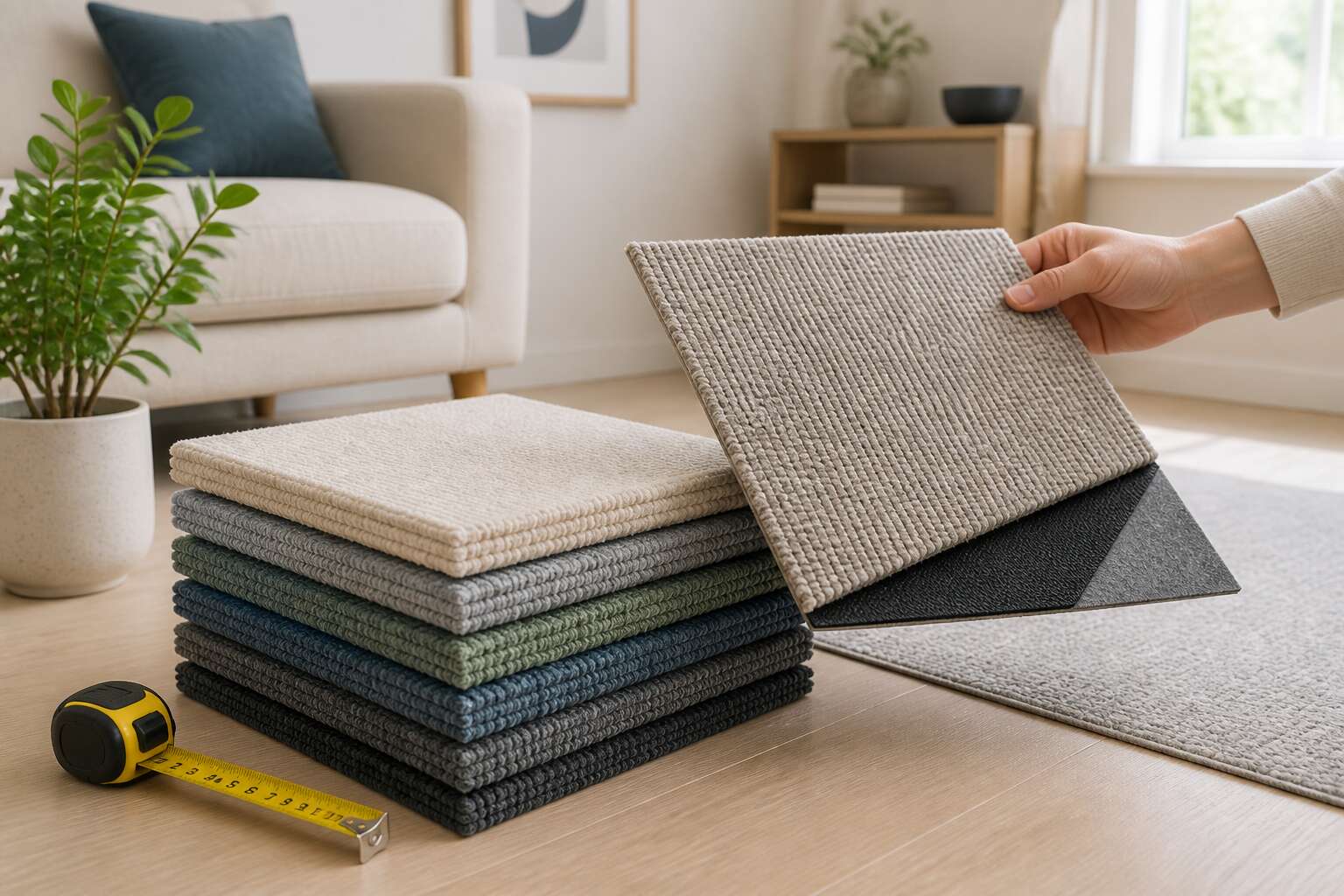
Most flooring decisions hinge on a simple number. For carpet tiles 6m2 is the standard box coverage, enough to resurface a small study or a bedroom in a rental unit. Carpet tiles are square modules of carpet with a bitumen or PVC backing. The difference from broadloom is practical: you install and replace individual pieces.
Here is what the modular design gives you:
– Interchangeable panels when a stain will not budge
– Easier transport in a sedan or taxi, since boxes fit into a boot
– Less waste when your floor plan has awkward corners
In South African homes, where humidity and load shedding cause wear, this flexibility matters. When you buy carpet tiles 6m2, you get a defined area and a clear plan. If one tile gets damaged, lift it out and slot in a spare from the same batch. You do not tear up an entire room.
For renters and first-time homeowners, the practical autonomy is the draw.
Standard Carpet Tile Sizes and Their Impact on 6m2
Twenty-four individual tiles sit inside a standard carpet tiles 6m2 box when each square measures 50cm by 50cm. That module, 0.25m2 per tile, is the most common format in South Africa. A 60cm by 60cm alternative covers 0.36m2, so six square metres requires just 17 tiles, usually rounded up to 18 for offcuts. That difference matters when cutting around door frames!
These dimensions shift your installation strategy. Smaller tiles produce more seams but handle awkward corners with ease. Larger tiles reduce visible joints but demand precise measurement before the first cut.
Some installers prefer a coverage checklist, and I count myself among them:
- One 6m2 box fits a 2m by 3m room exactly.
- Irregular floor plans push waste to 10 percent, so order extra.
- Batch numbers differ subtly in shade, so buy all spares at once.
The 6m2 standard matches the average South African study or rental bedroom floor plan. When you purchase carpet tiles 6m2, the coverage calculation is already done.
Benefits of Carpet Tiles for Small Spaces
Six square metres sounds abstract until you map it onto your own floor. That is the footprint of a typical South African rental bedroom, a compact home office, or a narrow passage. When you order carpet tiles 6m2, the product arrives ready to transform that exact area into a finished surface.
The real advantage of modular flooring in small rooms is the ability to phase the installation. Lay a few tiles, live with them, and continue later. This matters in spaces where furniture cannot be fully cleared. Carpet tiles 6m2 also allow selective replacement. A coffee spill or scuffed corner no longer means replacing an entire fitted carpet.
The 6m2 format offers design flexibility that broadloom cannot match:
- Mix two tones to create a checkerboard.
- Rotate pile direction to add texture.
- Swap one tile to refresh the room.
Calculating Carpet Tiles Needed for 6m2
How to Measure Your 6m2 Space Accurately
One misplaced tape measure reading can transform a modest 6m2 renovation into a frustrating exercise in waste. Most people calculate by multiplying length and width, but they forget to account for the irregularities that exist in every South African room, from bay windows to uneven wall lines.
For carpet tiles 6m2, precision matters because each tile represents a fixed portion of your total area. I always advise measuring the longest and widest points of your space, then recording those numbers twice.
- Record each dimension in millimetres to avoid rounding errors.
- Multiply length by width to find the square metre value.
- Add a 5% cutting allowance for edges and corners.
This method yields the true quantity needed for installation, and it prevents the costly second order that so often follows a rough estimate.
Tile Size Options and Quantity Calculations
Here is where the arithmetic gets real! A 6m2 space does not care about your feelings or your calculator’s battery life. You need to know how many carpet tiles 6m2 actually requires, and that depends entirely on the tile dimensions you choose.
Take a common 500x500mm tile. That is 0.25m2 per tile. Divide 6 by 0.25 and you get 24 tiles. The cutting allowance from your earlier measurements means you should order 26 or 27. Larger formats change the math:
- 600x600mm tiles give you 0.36m2 each, so you need 17 tiles for the base area.
- 610x610mm tiles, the office favourite, work out to 17 tiles as well.
- 1m x 1m tiles need just 6, but cutting waste becomes brutal.
The tile size must match the room’s dimensions, because the total area hides the truth about the final row. For carpet tiles 6m2, smaller formats give you room to handle edges without wasting a full square metre.
Accounting for Waste and Cutting Allowances
Ordering exactly 24 carpet tiles for a 6m2 room is a gamble that often ends in regret. The offcuts from doorways, awkward corners, and pipe penetrations add up quickly. A 10 percent cutting allowance is the industry standard, but that assumes your room has clean lines. For carpet tiles 6m2, irregular edges might require closer to 15 percent.
Consider these common culprits of tile wastage:
– Recessed door frames that require precise slices
– Radiator pipe cutouts that consume full tiles
– Skirting board gaps that demand thin strips
Patterned tiles complicate the maths further. They need alignments that generate extra offcuts. Matching the pile direction also forces you to buy more than the raw area suggests. The safest approach is to calculate your base quantity, then add the allowance before rounding up. For carpet tiles 6m2, this extra step prevents a second delivery, which costs both time and money.
Using Online Calculators for 6m2 Projects
For a space as finite as 6m2, the margin for human error in calculation is nearly zero. One miscounted row or an overlooked doorway transforms a simple project into a puzzle of improvised seams. This is where the digital hand of online calculators becomes your most reliable partner, stripping away the guesswork from your floor covering layout. These tools ask for your precise dimensions, then compute the exact number of units required for the area, including the standard breakage margin we’ve already discussed.
However, the true elegance of these digital tools emerges when you use them to refine your ordering strategy. Most calculators will let you input the planks per box, which is crucial to avoid overpaying for full packs you don’t need. When you engage with a calculator for your 6m2 project, consider feeding it the following specific data points to get the most accurate result:
1. The exact length and width of the room, measured in millimetres at their widest points.
2. The specific dimension of the tile you intend to purchase, such as 50x50cm.
3. The quantity of flooring contained within a single retail box, if applicable.
I find that inputting the wastage percentage directly, rather than accepting a default figure, yields the best outcome for awkward layouts. By letting the algorithm handle the division, you free your mind to focus on the aesthetic installation rather than the arithmetic. This digital short cut ensures your final order is sufficient for the subfloor, without leaving you with a decade’s worth of excess material gathering dust in storage.
Selecting the Right Carpet Tiles for 6m2
Material Options: Nylon, Polyester, and Wool
Choosing carpet tiles 6m2 often comes down to the material beneath your feet. Nylon offers resilience and bounces back under heavy furniture, making it a workhorse for high-traffic corners. Polyester, softer and more colourfast, suits a room where comfort trumps constant wear. Wool, the introvert’s choice, regulates humidity and hides soil with natural crimp, yet demands gentler cleaning. For a space this size, the material dictates not just texture but how long the floor stays presentable. Consider these factors before committing:
- Nylon: durable, stain-resistant, slightly pricier.
- Polyester: budget-friendly, luxurious feel, less resilient.
- Wool: sustainable, insulating, higher maintenance.
Each option changes the psychology of the room; nylon feels clinical, wool warm, polyester indifferent. Your carpet tiles 6m2 deserve a material that matches your daily rituals, not only the swatch. That alignment turns a practical purchase into a quiet daily affirmation.
Backing Types and Their Importance
The backing beneath your carpet tiles 6m2 determines how the floor behaves underfoot and over time. In South African homes, where humidity and temperature fluctuate sharply between coastal and inland regions, the wrong backing can lead to curling, peeling, or moisture traps. Bitumen backing remains the most common choice, valued for its stability and affordability. PVC offers a denser, more waterproof base, which suits kitchens or rental flats where spills happen daily.
Felt backing, by contrast, feels softer and quieter but lacks the rigidity needed for high-traffic zones. The installation method also hinges on the backing: peel-and-stick tiles rely on a pre-applied adhesive layer, while loose-lay options use weight and friction to stay put. For a space as compact as 6m2, the backing dictates how easily you can replace a single worn tile. In a carpet tiles 6m2 installation, this matters when one unit stains and the rest remain pristine.
Style and Design Considerations for Small Areas
Small spaces punish indecision. In a 6m2 room, every tile’s direction and tone alter the perceived size. Light shades with a low-contrast grid create a continuous plane, while dark tones shrink boundaries. Choose one dominant texture and let the layout do the work.
For design impact, consider the view from the doorway. A diagonal arrangement elongates the sightline, but it increases cutting waste. A quarter-turn pattern offers subtle movement without visual noise. Avoid busy motifs that fragment the floor.
- Use large-format visual tiles to reduce gridding
- Match tile color to walls for a seamless fade
- Set one tile as a feature anchor near the entrance
Proportions matter more than pattern variety in a compact footprint. When you select carpet tiles 6m2 for a home office or guest room, prioritize tonal harmony over bold statements. The floor should support the room’s purpose without competing for attention.
Durability Ratings and Traffic Levels
A small room does not mean light traffic. Durability ratings feel abstract until you rely on a floor every day. A 6m2 study or guest bedroom concentrates footfall, chair castors, and spills. Traffic in a small space is rarely light, even if the room looks modest.
Match a rating to your reality. Domestic grades cover low to medium use, but a home office needs at least a heavy domestic rating. Commercial grades add a safety margin for rental units or shared spaces. Backing density and fiber twist matter more than pile height. Compare these metrics:
- Tuft twist per meter, which indicates resilience to crushing.
- Backing weight, which affects dimensional stability.
- Stain treatment, which reduces maintenance after spills.
Choose carpet tiles 6m2 with a rating that exceeds expected traffic. The extra cost delays visible wear.
Installation Approaches for 6m2
DIY vs Professional Installation
Installing carpet tiles 6m2 can feel deceptively simple. The tiles often use peel and stick backing, which tempts many homeowners to skip the professional route. For a flat, unobstructed floor with clean edges, DIY installation is entirely achievable. You save on labour costs, and you control the pace!
Yet professional installation changes the outcome. A 6m2 carpet tile project still requires precise cutting around doorframes, skirting boards, and irregular corners. An experienced installer ensures the adhesive bonds evenly and the pattern aligns without gaps.
Consider these factors:
– Subfloor condition. Uneven concrete needs levelling before any tile goes down.
– Tile pattern. Complex designs demand a practiced eye.
– Time. A professional finishes in hours, not days.
The scale of the project does not dictate the skill required. It only narrows the margin for error.
Tools and Materials Required
Installing carpet tiles 6m2 demands more than a utility knife and good intentions. A straight edge, chalk line, and sharp blade form the core toolkit. Peel and stick tiles need a roller to press the adhesive evenly. Loose lay tiles require no glue, but precise trimming becomes critical to prevent shifting.
Before you begin, assemble the essentials:
- Measuring tape and pencil
- Knee pads for prolonged floor work
- Seaming iron for welded seams on glue down tiles
The subfloor must be clean, dry, and level. A 6m2 area allows for quick progress, yet alignment errors multiply fast. Work from the room’s centre outward, using spacers to maintain consistent gaps. A trowel with the correct notch size matters for adhesive application. In South Africa, humidity affects curing time, so check the product’s temperature range before committing.
Step-by-Step Laying Patterns
The laying pattern is the first thing a visitor registers in a 6m2 room, even before the colour. A quarter turn layout produces a subtle basket weave, while a straight lay with a staggered brick bond hides minute subfloor inconsistencies. Snap a chalk line through the room’s centre, never from the wall, since skirting lines often drift.
Set your first carpet tiles 6m2 against that line in a pyramid sequence, working outward quadrant by quadrant. Press each tile with a roller or hand pressure before adding the next. Offcuts accumulate near the perimeter, and half tiles should be cut against the chalk line, not the skirting board. The resulting field looks deliberate and calm.
Dealing with Irregular Shapes and Obstacles
Most 6m2 rooms are not perfect rectangles. Doorways intrude, pipes rise from corners, and alcoves create awkward angles. The approach changes when the space is irregular.
When installing carpet tiles 6m2, map the obstacles on paper first. Measure from each obstacle to the nearest wall, then transfer those measurements to the floor. Cut cardboard templates for complex shapes like radiator pipes. A utility knife scores the backing cleanly, but cut the tile face up to avoid chipping.
Work from the centre line outward for irregular perimeters. Keep full tiles in the central field, and push cutting to the edges. Half tiles near doorways should fit the jamb, not the door itself, since jambs are rarely square.
The sequence matters:
1. Fit full tiles first.
2. Mark obstacles with chalk.
3. Cut and test each piece before applying adhesive.
This order prevents cutting a tile too small, a mistake that compounds when installing carpet tiles 6m2.
Cost and Maintenance for 6m2 Carpet Tiles
Price Ranges and Budgeting for 6m2
The price of carpet tiles 6m2 hides itself beneath obvious figures. A quote may whisper a modest number, yet the true obligation emerges through maintenance and longevity. In South Africa, budget polyester tiles run around R120 to R250 per square metre, while premium wool can demand R600 or more. Budgeting for a 6m2 installation must include adhesive, underlay, and a cutting allowance of ten percent.
Recurring costs accumulate quietly. Dust settles into every seam, demanding regular vacuuming. Spills require prompt neutral detergents, and damaged sections force individual tile replacement. Consider these duties:
- Weekly vacuuming to extract embedded grit from the pile.
- Immediate spot cleaning with pH neutral solutions.
- Occasional re adhesion of loose edges using floor adhesive.
Each backing choice alters how stubbornly dirt clings, vital for small rooms. The cheapest option often increases your time and replacement budget, whereas dense nylon reduces long term expenses for carpet tiles 6m2.
Long-Term Maintenance and Cleaning
Once carpet tiles 6m2 settle into a room, the true maintenance rhythm begins. Fine sand from Cape Town winds or Highveld dust works its way into seams and backing. A weekly vacuum with a beater bar lifts abrasive soil before it grinds the pile flat. For deeper cleaning, a dry extraction compound pulls hidden grime without saturating the tile edges, where moisture weakens the adhesive.
Spills demand faster action than carpet does. Blot, never rub, and use a neutral detergent to avoid residue that attracts new dirt. When a stain persists, swapping one tile is simpler than replacing an entire floor. Always keep spare tiles from the original batch, as dye lots shift over time.
- Use a HEPA filter vacuum every week to capture fine particles.
- Treat stains within ten minutes to prevent wicking.
- Steam clean sparingly, only when the backing is fully sealed.
Regular attention keeps carpet tiles 6m2 looking sharp without frequent replacement.
Replacing Individual Tiles vs Full Refit
There is a quiet economics to a 6m2 space that many overlook. The initial outlay for carpet tiles 6m2 is often less than wall to wall options, but the true value calculation happens years later, in the moment of damage. A dropped cigarette in a dark corner or a stubborn wine spill no longer dictates a full financial redress. The modular nature allows you to excise the flaw, removing the single offender and replacing it with a pristine square from your stored reserve. This surgical approach costs a fraction of a full refit, which would involve removal, disposal, and new underlay.
The other path, the full refit, is a project of disruption. It means moving furniture, losing a day of your life, and dealing with the dust of old adhesive being scraped from the concrete slab. For a small area, the professional installation fees can outweigh the material cost dramatically, making the act of replacement an expensive undertaking.
- Replacing one or two units is a task completed in under an hour.
- A full refit for 6m2 can take a full day and requires a professional eye.
- Spare tiles from the original batch guarantee a perfect color match, whereas a new batch might show a dye lot shift.
Consider the longevity of the floor itself. With a full refit, you are not just paying for new carpet tiles 6m2, but for the entire logistical chain of destruction and renewal. With individual replacement, you prolong the life of the existing floor indefinitely. The seams remain tight, the pattern remains unchanged, and the visual consistency of the room is preserved. It is a strategic patience that prefers a scalpel to a sledgehammer, and it is the definitive reason the modular format holds such appeal for the discerning homeowner managing a small footprint.


0 Comments