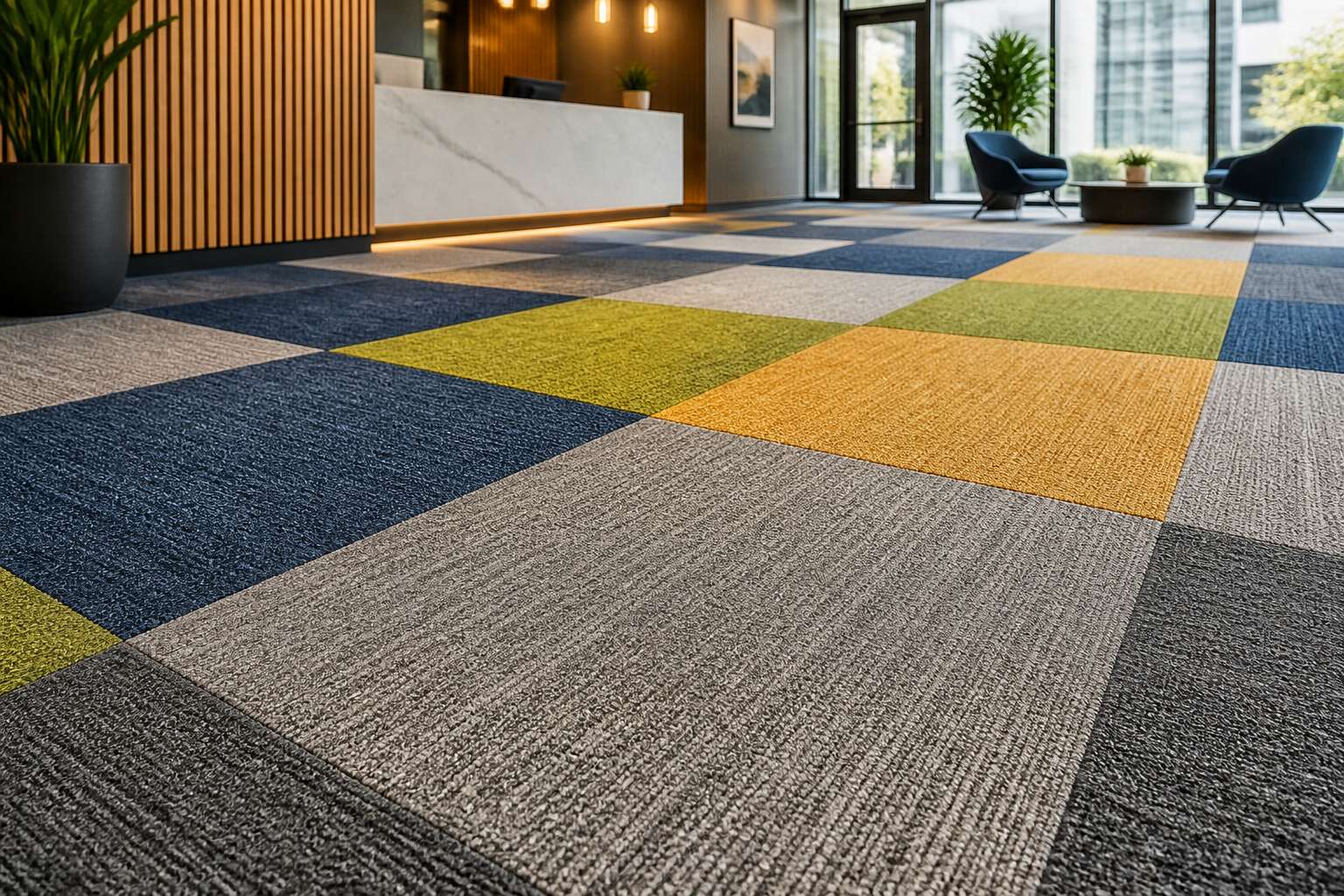
Why Choose Carpet Tiles for Your Space
Unmatched Versatility in Design
When a floor must adapt to shifting needs, carpet tiles nearby offer a rare kind of autonomy. Each square is a discrete unit, so a design can evolve without tearing out the entire plane. You can merge textures, stagger shades, or lay a bold geometric border into an otherwise quiet field. This modularity also simplifies logistics: a single box carries to the boot of a car, and damage to one tile never demands a full replacement. The system works in a direct way:
– Interchange accent strips to define walkways
– Rotate stock across seasons to distribute wear evenly
– Mix pile heights to separate quiet zones from active lanes
For office floors and home studios alike, the outcome is a surface that adapts to how people actually move and work. Those searching carpet tiles nearby gain a flooring solution that stays responsive to daily use, rearranged as needs change.
Durability for High-Traffic Areas
A school corridor in South Africa sees more foot traffic in a week than most living rooms see in a decade. That level of abuse demands a floor built for serious punishment. Carpet tiles nearby, in commercial grade construction, deliver exactly that through engineering rather than luck.
The construction uses dense pile yarns and robust backing layers that resist delamination. I will show you a quick test: drag a filing cabinet across a tile. Then lift it. The tile stays put. No ripples, no tears. That is tensile strength in practice!
Consider the zones that endure the worst abuse:
- Entryways that trap grit from the street
- Corridors where trolleys roll daily
- Reception zones where chairs scrape
The tiles absorb the abuse individually. When one shows wear, a replacement tile slots in without disturbing the rest. Your floor maintains its appearance for years, not months.
Cost-Effective Replacement Options
Few flooring decisions offer the quiet pragmatism of carpet tiles. I have watched facility managers embrace the economics. A single damaged section no longer demands a full room overhaul. Instead, you reach for one tile, and a fresh installation costs a fraction of traditional broadloom replacement.
The initial price of carpet tiles nearby often aligns with standard options. The real savings emerge through maintenance cycles. Consider what gets replaced over a lease term:
- A stained tile near the entrance
- A faded tile under a window
- A torn tile from a furniture move
Each replacement takes minutes without specialist tools! Your space retains its composed appearance. The financial advantage compounds through reduced labour and material waste. For offices and hospitality venues across South Africa, carpet tiles nearby offer a refined balance of restraint and longevity. The upfront choice quietly delivers savings every time you avoid a complete floor replacement.
Easy Maintenance and Cleaning
Every floor absorbs its share of stains and scuffs. In South African offices and homes, that wear often arrives as a spilled coffee, a dragged chair, or muddy footprints. Carpet tiles nearby make the response straightforward: you lift the affected tile, and the problem disappears with it.
Cleaning becomes a simple rotation rather than an intensive project. I have watched this in managed spaces. A regular vacuum pass handles surface grit, while a gentle spot cleaner addresses the occasional mark. For deeper accidents, the individual tile lifts free without specialist equipment or expensive treatments. The rest of the floor stays untouched.
- Vacuum weekly with a brush attachment to lift embedded grit
- Blot spills immediately with a microfibre cloth
- Swap in spare tiles from stock to balance visible wear
This rhythm saves hours each month and spares your budget the strain of professional deep cleans. For property managers who value time as much as appearance, carpet tiles nearby deliver that quiet efficiency.
Sustainable Flooring Solutions
South African landfills receive thousands of tons of discarded broadloom carpet each year. Carpet tiles nearby offer a different trajectory. The modular format means a stained or worn tile lifts out while the rest of the floor stays put. That single action slashes renovation waste and postpones full replacement by years.
The sustainability case extends beyond disposal. When you search for carpet tiles nearby, several suppliers stock products manufactured from recycled nylon and reclaimed backing. These tiles carry measurable embodied carbon savings, which matter for Green Star accreditation. A loose-lay installation removes adhesive entirely, lowering volatile organic compound levels in the indoor environment.
When a space changes function, the tiles move with it. Reinstallation takes hours, not days. This is flooring designed for adaptation, a quiet answer to the throwaway culture that plagues the building industry.
How to Select the Right Carpet Tiles
Assessing Foot Traffic and Usage
A busy office corridor in Johannesburg receives more footsteps in a week than a residential hallway sees in a year. That measure drives every carpet tile selection I make. Before you compare colours, watch the room. Notice where people walk, stand, and pause.
Questions worth asking:
- How many people use this room daily?
- Do they arrive with dirt, moisture, or wheels?
- Are there heavy furniture legs or concentrated load points?
Usage also matters. A tile that handles a quiet study will not survive a school corridor. If you need carpet tiles nearby, check the traffic class rating and match it to the room’s daily pattern. I have seen elegant tiles fail in a busy hallway because the foot traffic was underestimated.
Comparing Fiber Types: Nylon, Polyester, and More
Polyester stains resist, but nylon endures rough use. I’ve seen both in South African offices and homes, and each behaves differently. The fibre you choose changes everything. Nylon springs back from heavy chair wheels, while polyester feels softer under bare feet. Triexta, a newer option, combines stain resistance with comfort.
When you search for carpet tiles nearby, compare twist and density, not only the brand name. A tighter twist means the yarn holds its shape. Lower density means faster flattening. For bedrooms, polyester may suffice. For conference rooms, nylon lasts longer. These durable fibre traits stand out:
- Nylon: most durable, resists crushing
- Polyester: softer, stains less easily
- Triexta: good balance of both
You will find carpet tiles nearby in many retailers, but few explain these differences clearly. The right fibre reveals itself in how the room feels after a year of use.
Understanding Backing Systems
The underside of a carpet tile accounts for roughly a third of its weight, yet most shoppers never flip one over. That is a mistake. When you search for carpet tiles nearby, the backing system determines how the tile behaves during installation and after five years of Highveld sun exposure.
Three backing types dominate the South African market:
- Bitumen: heavy, stiff, budget friendly, and slow to cut.
- PVC: stable under rolling chairs, but it can dent and emits VOCs.
- Polyurethane: lighter, quieter, and easier on a DIY knee.
Bitumen once ruled office parks. Now polyurethane backs more imported tiles. The choice affects adhesive requirements, moisture resistance, and whether a failed tile pops out cleanly. A peel-and-stick release liner saves time but demands a perfectly level subfloor. Before you choose carpet tiles nearby, check the backing label. That label also lists the fire rating and recycled content. It reveals more than any showroom photo.
Exploring Color and Pattern Choices
Colour selection becomes a strategic decision when you look for carpet tiles nearby. The Highveld sun moves across a room for eight hours, and that changes how a pattern reads. A dark tile with a fleck will hide the dust that settles through open windows, while a light tile makes a small office feel larger.
- Consider the direction of natural light in the room
- Use larger patterns in open spaces and solids in corridors
- Choose tiles with a fleck or blend to mask traffic wear
Mixing two shades from the same colour family creates a checkerboard effect without visual noise. I have seen clients pick a single bold tile for a reception area and regret it after three months. The bold colour works, but only if you order extra for future swaps.
Checking Certifications and Indoor Air Quality
The air inside a building often carries more pollutants than the air outside. That fact becomes relevant when you search for carpet tiles nearby, because the adhesives and backings used in softer flooring can emit volatile organic compounds for weeks. Certification labels cut through the noise. Look for the GreenLabel Plus mark from the Carpet and Rug Institute, or the local SABS approval. These indicate emissions have been tested within strict limits.
A quiet room can still be an unhealthy one. I once walked into a newly fitted office where the smell of fresh carpet made my eyes water. The installer had skipped ventilation. Ask for product data sheets when sourcing carpet tiles nearby, and check whether the tile meets South African indoor air quality standards. Some manufacturers offer low emission tiles without a formal label, but documentation proves it.
- GreenLabel Plus (CRI)
- SABS 1514 compliance
- Agrément South Africa
Each mark verifies something different, but all point to safer air for the occupants.
Understanding Carpet Tile Installation Options
DIY Installation vs. Hiring a Professional
The difference between a flawless floor and a frustrating one often comes down to who installs it. DIY installation of carpet tiles is tempting, especially with peel and stick options that promise a quick weekend project! From my experience, South African homes with older concrete slabs or uneven subfloors complicate adhesive bonds and levelling.
Professional installers bring tools like power stretchers and accurate cutting guides. They also handle floor preparation, which determines how long the tiles last:
- Moisture testing of the substrate
- Leveling compound application
- Proper adhesive selection
Hiring a professional costs more upfront, but mistakes such as misaligned seams or air pockets often require expensive rework. Quotes from suppliers of carpet tiles nearby help you weigh these options against your budget and timeline.
Essential Tools and Materials
A tape measure and a sharp utility knife form the foundation of any carpet tile project. The tiles themselves are forgiving, but the cutting guide you choose determines whether edges meet flush or drift apart. In South African homes, where concrete slabs often absorb moisture unpredictably, a moisture meter earns its place beside the basic toolkit.
- Notched trowel matched to the adhesive specification
- Knee kicker for tight perimeter adjustments
- Chalk line for grid layout across uneven surfaces
Adhesive selection deserves attention. Pressure sensitive glue lets you lift a damaged tile later without harming its neighbours, a practical benefit when you sourced carpet tiles nearby. Seam sealer and a weighted roller complete the material list. The roller presses out trapped air that would otherwise show as ripples under certain lighting.
Peel-and-Stick vs. Glue-Down Methods
Peel-and-stick tiles appeal to the impatient, and I understand that pull. You peel, you press, you move on. But that pre-applied adhesive forms a fixed bond with the subfloor, and in Johannesburg’s temperature swings, that grip can loosen over time. Glue-down methods demand more patience upfront. You spread adhesive, wait for the tack, then lay each tile carefully. The reward is a permanent bond that survives rolling chairs and heavy footfall without shifting.
When you source carpet tiles nearby, ask the supplier which method they recommend for your specific concrete slab. The answer depends on humidity, sunlight exposure, and how long you plan to stay in that space:
- Peel-and-stick suits rentals or short-term offices where removal matters later.
- Glue-down suits permanent floors where stability outweighs convenience.
Neither method forgives a dirty floor. Dust acts as a release agent, silently undoing your work. This is where the moisture meter from your toolkit earns its keep. If the slab reads above acceptable levels, no adhesive choice will save you.
Carpet Tile Maintenance and Longevity
Daily Cleaning Routines That Extend Life
Every gram of dust carries microscopic grit that abrades carpet fibers. A daily sweep with a soft brush or vacuum prevents this dulling effect. I have seen floors age a decade in two years simply because surface soil sat untouched.
For carpet tiles nearby, the daily routine matters more than the fiber type. Focus on entry points and walking lanes. Vacuum with the beater bar on low to protect edges. Blot spills immediately with a dry cloth, never rub.
- Morning vacuuming of high traffic areas
- Weekly inspection of seams and corners
- Entrance mats that capture outdoor grit
These small acts preserve the pile and pattern. Daily care costs little time and keeps the installation looking fresh for years.
Tackling Stains and Spills Effectively
Stains appear at the worst moments. Red wine during a meeting. Coffee during a site inspection. The good news is that carpet tiles nearby let you treat the problem directly without shutting down an entire room!
The chemistry of a stain matters more than reaction speed. Protein-based spills like milk or blood require cold water. Heat sets them permanently. Tannin stains from tea respond to mild acidic solutions. Oil-based marks need solvent-based cleaners applied sparingly.
Most commercial carpet tiles carry a stain-resistant treatment in the fibre. This gives you roughly 12 hours before the bond strengthens. A stain crossing a seam changes the calculation. A stain contained within one tile behaves differently from one that spreads across two.
I have watched facility managers panic over a single mark. The stain itself is manageable. The wrong cleaner leaves a permanent shadow that no amount of scrubbing will lift.
Replacing Damaged Tiles Without Full Removal
A single damaged tile does not mean a new floor. Most commercial spaces can swap out a worn or broken tile in under fifteen minutes. The secret is the modular grid. Each tile sits independently, so you lift one piece and slide in a fresh one.
The process is straightforward when you have carpet tiles nearby. You need a flat scraper, a utility knife, and a spare tile from the same dye lot. Heat softens the adhesive. A hairdryer or heat gun works for glue-down installations. I have seen facility teams complete this swap during a lunch break!
Check these details:
- Confirm the replacement tile matches the pile direction.
- Check the backing for damage before installation.
- Verify the dye lot with suppliers of carpet tiles nearby.
- Press firmly and allow 24 hours for the adhesive to cure.
The surrounding tiles stay undisturbed. This is why modular flooring outlasts broadloom in busy offices.
Knowing When It’s Time for a Full Upgrade
A commercial carpet tile carries a ten year warranty, yet its true service life depends on traffic and maintenance. Heavy footfall compresses synthetic pile over time. The texture changes, the colour dulls, and no amount of cleaning reverses the process. I have watched once plush offices develop hard, shiny pathways that reflect overhead light.
Three signals indicate that a full upgrade is closer than a repair job:
- The pile springs back slowly after vacuuming.
- Adhesive residue remains on the backing when you lift a tile.
- Stains return after repeated extraction cleaning.
When a facility manager finds carpet tiles nearby that match the dye lot, spot replacement works well for isolated damage. However, once the underlay feels spongy and more than a third of the floor shows wear, a full upgrade becomes the economical choice.
Finding Reliable Local Suppliers of Carpet Tiles
Researching Flooring Stores in Your Area
A reliable local supplier is worth more than a stack of discounts. The search for carpet tiles nearby should start with a phone call, not a website. Stores often list stock they do not have. Call and ask for the exact product code. If the assistant hesitates, that is your answer.
Next, visit the warehouse. Physical inspection reveals colour consistency and backing quality. Some suppliers only carry commercial grades, which are coarse and uncomfortable. Ask about offcuts to save money on small spaces. Also confirm the origin, because locally made tiles handle humidity better.
- Verify the delivery radius and cost.
- Request a sample before buying a full box.
- Check if they match competitor prices, since haggling is common.
Once you secure carpet tiles nearby, keep receipts and photographs of the packaging. Damaged tiles often appear after the contractor leaves. A trustworthy supplier will stand behind their stock without a theatrical sigh.
Leveraging Online Reviews and Recommendations
A staggering 91% of South African homeowners read online reviews before flooring purchases, yet many still pick the first name that appears in search results. That is a mistake. Reviews of carpet tiles nearby reveal hidden patterns: delivery delays, colour inconsistencies, or brittle backing.
Start with Google Maps and local Facebook groups. Locals are brutally honest. A supplier praised repeatedly across platforms earns credibility. Then examine how the business responds to criticism. Courteous, solution-focused replies indicate reliability.
- Look for recent reviews naming specific products.
- Check customer photos against current stock.
- Prefer responders who offer fixes, not excuses.
Personal recommendations from builders or friends still matter. Verify them online anyway. A stable review history justifies the extra drive.
Requesting Samples to Evaluate Quality
Anyone can promise a flawless floor, but only a supplier willing to hand over samples earns my trust. When you ask for swatches of carpet tiles nearby, watch how they respond. A grumble about wastage or a request for a deposit signals trouble. The best suppliers pass over offcuts without ceremony.
- Inspect the backing for flexibility and fraying edges.
- Bend the tile to confirm the adhesive holds.
- Rub the surface to feel for rough fibres.
Take the samples home and live with them for a few days. Morning light reveals colour shifts. A reliable supplier encourages this deliberation. The local ones who offer generous samples usually stand behind their stock.
Comparing Pricing and Hidden Fees
Local suppliers often advertise bargain prices for carpet tiles nearby, but the real cost hides in delivery charges, cutting fees, and adhesive costs. I once requested quotes from three Durban suppliers and discovered a 40% price difference for identical stock. One added a ‘consultation fee’ that appeared nowhere on their website. Another charged extra for removing your old flooring, a separate service entirely. When comparing quotes, always ask for a full breakdown. This list prevents surprises later:
- Delivery and collection costs
- Cutting or trimming charges
- Adhesive and underlay prices
- VAT and possible surcharges
A supplier who hesitates to itemise is hiding something. Trust the one who explains each line with patience. In South Africa, freight costs from Johannesburg to Cape Town or Durban can double the total, so final pricing in writing matters before ordering carpet tiles nearby.
Inquiring About Warranties and Delivery Services
Half the battle with flooring is finding a supplier who answers the phone after you’ve paid. When searching for carpet tiles nearby, reliability matters as much as the pattern. A supplier with a physical showroom and a landline, not just a WhatsApp number, is usually a safer bet.
Ask about warranties before you commit. A reputable dealer will explain what the guarantee covers, from peeling edges to colour fading. Delivery requires equal scrutiny. That ‘free installation’ quote may exclude lifting your old carpet or carrying tiles up three flights of stairs. In Johannesburg, sand and grit cause rapid wear, so delivery timelines and protective packaging deserve attention.
A supplier offering clear written warranties and scheduled delivery slots earns your trust. Without those, your carpet tiles nearby might just be cheap, not clever.


0 Comments