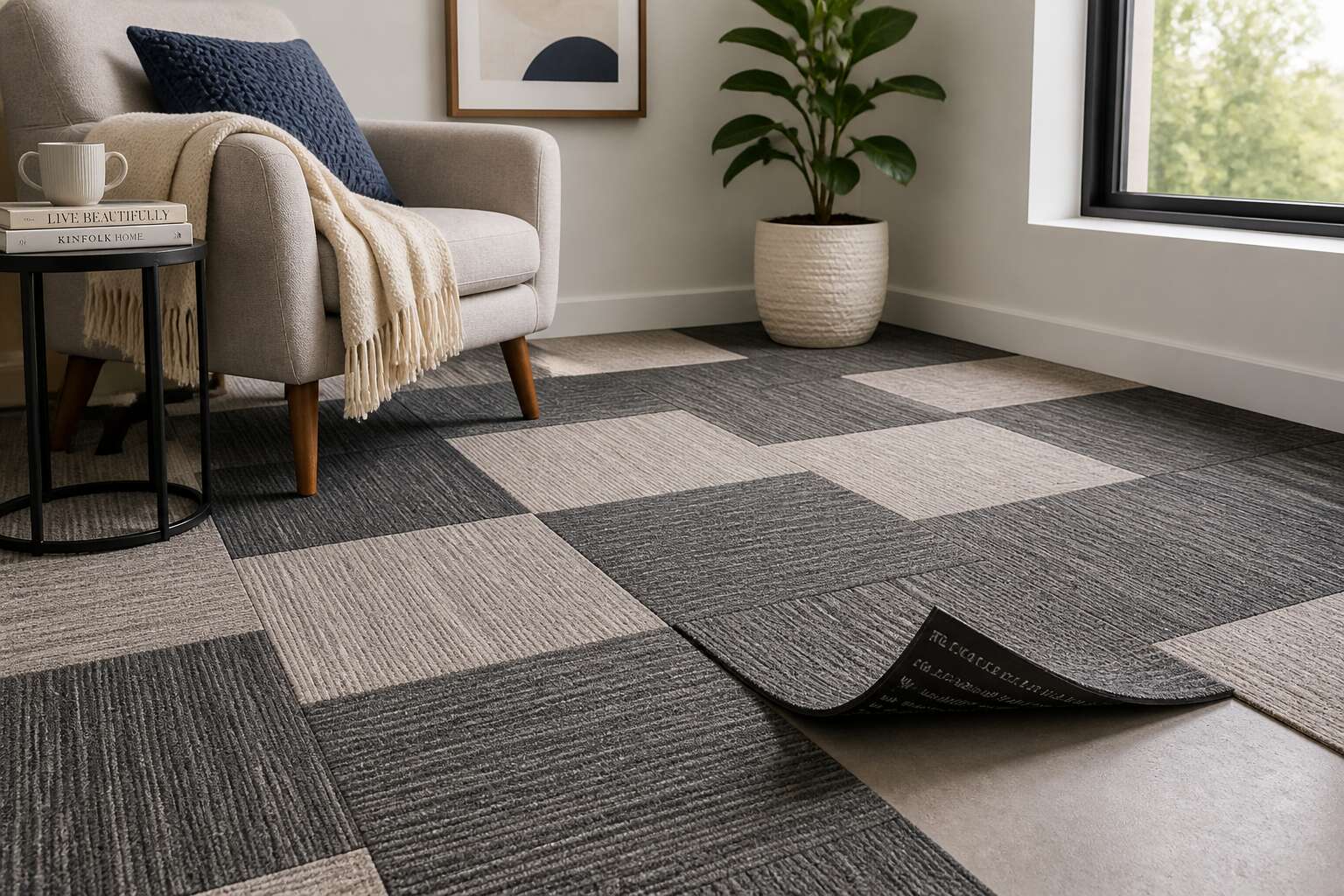
Why Carpet Tiles Are Ideal for Renters
Damage-Free Installation
Three out of five tenants lose part of their deposit to flooring damage. Carpet tiles renter friendly options end that anxiety. These tiles install with a pressure sensitive backing or simply lie flat, requiring no nails, no permanent glue, and no rough subfloor preparation. When moving day arrives, you lift a corner and peel the whole floor away in minutes. The concrete beneath remains untouched, exactly as your landlord left it. I have watched renters transform sterile rooms this way.
- Measure the space accurately
- Press tiles into place without tools
- Pull them up without residue
This method keeps your financial security intact and your creative freedom alive. Choose carpet tiles renter friendly for floors that move when you do, leaving no trace behind.
Portability and Reusability
Renters in Johannesburg or Cape Town often move every 12 to 24 months. That means furniture, boxes, and anything heavy becomes a burden. Carpet tiles renter friendly systems solve this. Each tile weighs under a kilogram, so you can carry a full room’s covering in two trips. No rolling up bulky carpets or hiring a van.
Once you arrive, reuse becomes the advantage. Tiles from your old bedroom can fit a new living room with simple trimming. Swap worn tiles near doorways with those under furniture. Rotate them seasonally for even wear. Broadloom carpet cannot do this.
- Arrange them in a fresh pattern
- Move them to storage easily
- Hand them to the next tenant when you leave
Each tile stays independent, giving you control over its lifespan. Carpet tiles renter friendly floors adapt to your changing layout without waste. Portability makes a temporary home more flexible.
Cost-Effective Flooring Upgrades
Renting in South Africa often means living with landlord-grade finishes. The floors are the worst offender: cold tiles, scuffed laminate, or threadbare broadloom. Replacing them is out of the question. Living with them is worse.
Carpet tiles renter friendly systems change the financial math. I have priced both routes, and the difference is stark. You buy only what the room requires, no rolls of carpet with unusable offcuts. A 10 square meter bedroom needs roughly 40 tiles, a fraction of what broadloom would cost for the same space.
The savings accumulate in specific ways:
- One damaged tile costs around R30 to replace, not R3,000 for a new carpet.
- No underlay purchase for most concrete subfloors.
- No disposal fees when you eventually move.
Your security deposit stays intact. This is carpet tiles renter friendly economics: every rand goes into the floor you live on, not the landlord’s pocket.
Style Versatility in Temporary Spaces
Temporary does not have to mean boring. I have seen rental bedrooms in Durban feel more intentional than permanent homes, simply because the floor carried the design. Carpet tiles renter friendly because they allow you to switch aesthetics on a whim. Arrange them in a grid, a diagonal, or a bold geometric layout that draws the eye.
When you want a fresh look, reposition the tiles. No stripping wallpaper, no repainting walls, no landlord negotiations. The same tiles that covered your study can become a feature wall for a weekend. Style versatility with zero permanent consequences.
For example:
- Define a reading nook with a contrasting border.
- Create a runway effect down a narrow passage.
- Match a single row to your sofa cushions for a coordinated finish.
Because the tiles are modular, your palette can evolve as your taste does. For renters who refuse to live in a blank box, that is the point.
Choosing the Right Carpet Tiles for a Rental
Peel-and-Stick vs. Loose-Lay Tiles
The choice between peel and stick and loose lay can make or break your rental experience. Both options qualify as carpet tiles renter friendly, but they perform differently under specific conditions. Peel and stick tiles feature an adhesive backing that bonds firmly to smooth subfloors. Loose lay tiles, on the other hand, rely on weight and friction to stay in place without any glue.
Understanding this distinction matters for your deposit. Peel and stick offers superior stability in high traffic areas. Loose lay provides unmatched convenience for those who move frequently.
– Peel and stick: ideal for permanent placement with a gentle removal process
– Loose lay: perfect for temporary setups with zero adhesive residue
– Peel and stick: requires a perfectly clean and level floor surface
– Loose lay: accommodates minor imperfections in the subfloor
Consider the condition of your rental floor before committing. Loose lay tiles perform best on flat, hard surfaces like concrete or existing vinyl. They shift slightly under heavy furniture, which can be a safety concern. Peel and stick tiles stay planted but demand patience during installation. Each misplaced tile becomes a sticky problem to rectify.
The removal experience differs significantly between the two formats. Loose lay tiles lift effortlessly when you vacuum underneath or slide furniture across them. Peel and stick tiles require a slow pull at a sharp angle to avoid tearing the backing. This factor directly impacts your ability to restore the apartment to its original state. A smooth removal protects your deposit and maintains goodwill with your landlord. Your decision ultimately depends on how long you plan to stay and the condition of your current floors. Both approaches provide carpet tiles renter friendly solutions that adapt to your living situation.
Material Options for Durability and Comfort
South African rentals see tenants move every three to five years on average, according to industry data from TPN. That constant churn means flooring must survive more than just daily foot traffic. It must endure the shifting weight of sofas, the drag of moving boxes, and the inevitable spills of hurried packing days. Material choice determines whether your carpet tiles look respectable at month six or frayed by month twelve.
Polypropylene stands as the workhorse for rental applications. This synthetic fibre resists moisture absorption, which prevents the musty odours common in coastal apartments and Highveld thunderstorms alike. Its low static charge means less dust clinging to the surface. Most importantly, it cleans with plain water and mild soap, no specialised chemicals required. For rentals with pets or frequent entertaining, this fibre type holds its colour and structure far longer than natural alternatives.
Nylon offers superior resilience for high-traffic corridors and doorways. It springs back after heavy furniture compresses it, maintaining a plush appearance beneath desk chairs and bed posts. The trade-off involves a higher initial cost, though many renters find the long-term durability worth the premium. When you layer these materials over dense PVC backings, you gain both insulation from cold concrete slabs and sound dampening for neighbours below.
– Polypropylene: best moisture resistance and easy cleaning
– Nylon: superior recovery after heavy furniture pressure
– PVC backing: adds thermal insulation and acoustic damping
– Bitumen backing: heavier weight for better loose-lay stability
The backing layer deserves as much scrutiny as the visible fibre. Bitumen backings add significant weight, which helps loose-lay tiles stay planted without adhesive. This weight also reduces the clicking sound when you walk across them in bare feet. PVC backings provide a softer underfoot feel, which matters in bedrooms where you step out of bed onto cold mornings. The combination of correct fibre and backing transforms carpet tiles renter friendly solutions into floor systems that survive the entire lease term without visible wear.
Color and Pattern Selection
Choosing hues for a rental involves more than personal taste. Lighter tones open up compact Johannesburg apartments, while deeper shades conceal the scuffs that arrive with each new tenant. Pattern selection carries equal weight. Small, mottled flecks disguise sand from Durban beaches and the red dust of Gauteng alike.
The practical side of carpet tiles renter friendly choices comes down to how patterns age across a lease. Consider these pattern approaches:
– Low-contrast speckles for high-traffic pathways
– Diagonal layouts to visually widen narrow passageways
– Border accents that define spaces without permanent walls
A neutral base with one bold tile near doorways adds visual interest without locking you into a theme. Choose wisely, and the floor becomes a backdrop that lets your furniture stand out.
Sizing and Thickness Considerations
Every rental begins with a negotiation between footprint and footprint, the dimensions of your life against the dimensions of the room. The right carpet tiles renter friendly choice requires a reckoning with proportions, a careful study of how a square of fibre will rest upon your floor. Measure the room with both tape and intention, as tiles that swim in a vast Johannesburg lounge will appear lost, while oversized squares in a compact studio will press against the walls like a crowd in a minibus taxi.
Thickness carries its own quiet authority. A low profile tile, barely rising above the concrete, offers a lean durability that suits the well travelled kitchen doorway. A thicker pile provides a cushion underfoot that softens the threshold between a corridor and a living space in Cape Town’s cooler seasons. Most renters select a standard 50cm square, a practical size that yields to the geometry of small rooms, saving you from the waste of cutting and the effort of repositioning.
– Look for a tile density that resists the indentation of heavy furniture
– Consider a thickness that bridges uneven subfloors without buckling
– Choose a size that simplifies replacement, as single damaged tiles are swapped with ease
The true art lies in balance. A tile too heavy becomes a permanent resident, while one too thin leaves you feeling every ridge and dip in the screed below. For the renter who values both security and the freedom to walk away, a midweight option in a modest size offers the sweetest compromise between portability and comfort.
Texture and Pile Height Decisions
Texture is the first thing a visitor notices, and the first thing a landlord inspects. A loop pile offers a firm, uniform surface that resists scuffs and repetitive tread. A cut pile feels softer under bare feet, but it shows footprints and vacuum marks readily. For a rental, the question is not which feels more luxurious, but which will survive the lease term.
Pile height changes how a room sounds and how a floor feels. Low pile tiles sit close to the subfloor, ideal for rooms where a chair must roll smoothly or a door must swing without catching. Higher pile introduces a cushioned step, but it traps dust and demands more effort when cleaning. Consider the room’s actual use before you commit.
- Loop pile for durability in high traffic passages
- Cut pile for comfort in bedrooms and lounges
- Berber for a textured middle ground
When you choose carpet tiles renter friendly, the texture becomes part of your deposit negotiation. A tile that hides wear keeps your relationship with the landlord simple, and carpet tiles renter friendly options let you swap a single square if a stain persists.
Installation Tips for a Damage-Free Setup
Preparing the Existing Floor
According to a 2024 TATA Africa housing survey, nearly 63% of South African renters have forfeited a portion of their deposit due to flooring disputes. This is where the humble carpet tile becomes your best ally. However, even the most temporary flooring solution demands a bit of groundwork before you start laying.
Preparation is less about achieving a sterile environment and more about protecting the landlord’s original surface. A few stray granules of sand or grit underfoot can act like microscopic sandpaper, wearing away at the underlying vinyl or timber. Give the area a thorough sweep and then a damp mop, but allow it to dry completely. Moisture trapped beneath your tiles can lead to mould, a problem far worse than a scuff mark.
One often overlooked step involves dealing with stubborn adhesive residue from previous coverings. Instead of reaching for harsh chemical strippers, try a heat gun and a putty knife. The gentle warmth softens the glue without damaging the substrate. It is a slow process, but it keeps the peace with your property manager. For a smoother, more efficient setup, consider these points:
- Inspect for protruding nails or staples and hammer them flush.
- Fill minor cracks with flexible filler, then sand flush.
- Vacuum one final time, paying attention to the corners.
Remember, the goal is to make the floor look untouched when you leave. A little elbow grease now saves you from a deposit deduction later, keeping your carpet tiles renter friendly and your bond intact. The effort you invest in surface preparation directly translates to the ease of your eventual departure.
Laying Carpet Tiles Without Adhesives
Laying carpet tiles without adhesive requires a precise sequence. Start from the centre and work outward. Loose lay tiles rely on friction and weight, so I always choose denser tiles. Tenants often use double sided tape at the edges, holding them without committing the floor to a sticky fate.
Traffic paths deserve attention. A rolling chair can nudge a tile out of alignment. A rug over busy zones adds weight. Others cut a silicone mat beneath the tiles, using mild tack as an anchor.
For carpet tiles renter friendly installation, order matters! Arrange tiles in a brick pattern to stagger seams. These carpet tiles renter friendly surfaces stay stable without any glue.
- Press each tile firmly, pushing air pockets toward the edges.
- Score and snap cuts along walls with a utility knife.
- Leave a small expansion gap against skirting boards.
That gap simplifies removal at lease end.
Working Around Obstacles and Doorways
Doorways demand precision. I measure the jamb and undercut it with a jamb saw. The tile slides beneath the frame, which avoids awkward notches and leaves a clean line.
Obstacles like pipes and radiator legs need a different approach. I trace the profile onto the tile using a compass or a cardboard template. Cut slowly, test the fit, and shave off small amounts. Carpet tiles renter friendly setups demand patience here!
- Use a sharp utility knife for crisp edges.
- Cut from the back to prevent fraying.
- Number each tile as you cut it.
That numbering saves time if you ever lift and relay the floor.
Seaming and Cutting Techniques
Seaming carpet tiles is a precision task. The grain direction matters. Mismatched piles create visible stripes. I align the backing arrows before pressing seams together.
Cutting asks for a sharp utility knife. A dull blade shreds the backing. I score the back first, then snap along the line. For curves, trace the shape and cut in small steps. Test the fit often, because a gap invites dust.
- Cut from the back to prevent fraying.
- Use a straightedge for long cuts.
- Check each seam before moving on.
Seams behave when tiles meet without gaps. Roll the joint to flatten edges. Carpet tiles renter friendly floors depend on friction, not glue. A clean seam keeps the floor ready for extraction when the lease says go.
Securing Edges with Double-Sided Tape
Securing edges with double-sided tape is the quiet hero of a damage-free setup. I’ve watched renters lose deposits over curling corners. A few strips under the perimeter keep tiles flat without residue. The trick is placement. Tape only the outer five centimeters, not the whole tile. This lets the center shift with temperature changes. For doorways, add an extra strip.
- Clean the floor first, dust defeats adhesion.
- Press tape firmly, then peel the liner.
- Use narrow tape for tight seams.
This approach preserves the subfloor. On moving day, the tape lifts cleanly. Carpet tiles renter friendly floors thrive on this balance of grip and release. I always test a corner before committing. The tape should hold, but not weld. That distinction matters.
Creating a Seamless Look with Tile Alignment
Once the perimeter is secured with tape, alignment becomes the next concern. I find that working from a fixed reference point, such as the room’s longest wall, prevents the gradual misalignment that ruins a seamless look. Instead of pressing each carpet tile renter friendly square into place blindly, I lay them dry and adjust the spacing before committing. A slight stagger in the grid, offset by a third, hides any manufacturer variation.
For perfect seams, use a straight edge and a sharp blade to trim only the edges that meet walls. The cut edge will butt against the adjacent tile, creating a clean line. Check the nap direction, it should run the same way across the whole floor. Light from a window will catch any mismatch.
- Start from the center of the room
- Use spacers between tiles
- Roll the seams with a floor roller
This process makes carpet tiles renter friendly spaces look intentional, not temporary. When the alignment is right, the floor reads as one continuous surface.
Removal and Restoration When Moving Out
Lifting and Peeling Tiles Safely
When the lease ends, the floor must survive inspection. Carpet tiles renter friendly options make this possible, but only if you pry them up with patience. Rushing the process turns a clean exit into a security deposit disaster.
Start at a corner. Slide a putty knife under the tile and lift slowly. For loose lay tiles, this is simple. Adhesive-backed tiles may resist, so warm them with a hair dryer to soften the glue. Then peel, don’t yank. Work in a steady line to avoid tearing the backing.
- Loosen the edge
- Peel at a low angle
- Remove residue with citrus cleaner
Once all tiles are up, check the subfloor for sticky spots. A quick scrape leaves the surface pristine. That is the real value of carpet tiles renter friendly living.
Removing Adhesive Residue
Moving out carries a particular weight, a final accounting of every mark left behind. The floor, once a canvas for your temporary life, becomes the measure of your tenancy. With standard flooring, this moment brings dread. Adhesive residue, scuffed edges, and torn backing can transform a deposit refund into a costly lesson. But the philosophy of carpet tiles renter friendly living extends to this final act, demanding a restoration that respects the space you are leaving.
The residue tells the story of your time there. Sticky patches from peel and stick squares, or the ghostly outline of double sided tape, cling to the subfloor like a memory you cannot shake. Removing this requires more than brute force. It requires a gentle hand and the right solvent. A citrus based cleaner, applied with patience, breaks the bond without harming the substrate beneath. Let it sit, let it work, then wipe the surface clean.
The process unfolds with a quiet rhythm:
1. Scrape away any remaining adhesive solids with a plastic putty knife, never metal.
2. Apply the citrus cleaner generously to the affected area.
3. Allow the solution to dwell for several minutes to soften the bond.
4. Wipe the residue away with a clean, dry cloth, working in small circles.
This meticulous care is the quiet victory of the renter. The subfloor, bare and clean, is a testament to your stewardship. It is not merely about avoiding a penalty. It is about leaving the space as you found it, a blank slate for the next dreamer. The true luxury of carpet tiles renter friendly options is not just the freedom to create, but the freedom to depart without a trace, your footprint wiped clean by your own diligence. The deposit returns, and so does your peace of mind.
Cleaning and Refreshing the Underfloor
The underfloor accumulates dust, scuff marks, and adhesive traces during a tenancy. Removing those carpet tiles leaves this surface exposed. Cleaning the underfloor requires attention before you hand back the keys. A carpet tiles renter friendly approach includes this final refresh. The process is straightforward:
- Vacuum thoroughly to capture loose fibres and grit.
- Spot clean discoloured areas with a pH neutral cleaner.
- Rinse with a damp cloth, then dry completely.
This refresh eliminates the visible signs of your stay. The floor returns to a neutral state, ready for inspection. Your landlord’s walkthrough becomes a routine check. The space feels original again, prepared for the next occupant.
Repairing Minor Discoloration or Indentations
Some marks survive a standard clean. A dropped iron burns a brown patch into the tile. A filing cabinet leaves a permanent depression. These blemishes require targeted treatment before handover.
Indentations respond to heat and moisture. Place a damp cloth over the crater and press a warm iron across it in short bursts. The steam swells compressed fibres upward. Let the area dry fully, then check the level. Repeat if the depression remains.
Discolouration needs gentle abrasion. Use a fine pad to work the surface in small circles. Wipe clean with a pH neutral solution. If the stain stays, swap that tile with a spare from a cupboard. Carpet tiles renter friendly setups make this exchange simple. The damaged tile disappears, and the floor looks uniform again.
Storing Tiles for Future Use
When the lease ends, removal becomes a straightforward task if you planned ahead. I have seen loose-lay tiles lift in seconds, while peel-and-stick tiles need a putty knife and a little patience. Lift each tile from a corner and work slowly to avoid tearing the backing.
Store the tiles flat in stacks of ten, pile facing up, in a dry room away from sunlight. Label each stack by room. Reinstallation moves faster when you know exactly which tile belongs where.
A careful tenant follows this order:
- Wipe each tile clean before stacking
- Slide cardboard sheets between layers
- Use the original boxes for smaller loads
A tidy removal protects your deposit. Carpet tiles renter friendly systems reward this care by surviving repeated moves. Carry them to your next flat and lay them again without fresh adhesive. You leave one home spotless while taking your floor with you.
Creative Applications for Renters
Defining Zones in Open-Plan Studios
Open-plan studios force a single square footage to play many roles. The trick is to create psychological separation without committing to permanent walls. Carpet tiles renter friendly solutions allow you to shift boundaries as your routines change.
Place a dark tile cluster under your desk to signal work mode. A lighter patch near the window becomes your reading nook. These visual cues alter how you move through the space. I have found that even a small change in texture resets the whole room’s energy.
- Sleeping corner
- Dining area
- Yoga or workout space
For example, lay a 60 cm square of plush tiles beside your bed. The softness underfoot tells your brain it is time to wind down. Meanwhile, firm tiles at the entrance handle traffic without wearing thin. No adhesive, no residue, and the boundary moves when you move.
Creating a Durable Home Office Mat
A rolling chair can grind a groove into a wooden floor within weeks. I avoided that by building a durable home office mat from carpet tiles renter friendly. The key is choosing the right tile for the job.
I looked for three characteristics:
- Dense, low-pile construction that lets casters glide without snagging.
- A rubberized backing that grips the floor without adhesive.
- Square edges that lock together to form a seamless surface.
I arranged the tiles in a rectangle that extends past the chair’s turning radius. The mat feels solid underfoot, and it protects the floor from scuffs and indentations. When one tile shows wear, I simply lift it and replace it with a spare. That is the advantage of a modular system!
Protecting Hardwood Floors from Scratches
A single chair drag, a dropped ceramic bowl, or the grit under a dog’s paw can scar a hardwood floor in seconds. The silence that follows that first, deep scratch is a sound every renter knows. Your deposit hangs in the balance, and traditional area rugs can trap moisture or shift, creating their own problems. The strategic use of carpet tiles renter friendly offers a more surgical approach to floor defense.
Rather than covering the entire room, you can deploy these tiles as a protective shield in high-traffic corridors. Think of a pathway from the entrance to the kitchen, or a landing zone beside the bed. Carpet tiles renter friendly with a dense, low profile texture act like a sacrificial layer, absorbing the friction that would otherwise damage the wood. This targeted placement is a creative hack for preserving the floor’s original sheen without committing to a permanent, room-wide covering.
The true genius lies in the modularity for a renter’s lifestyle. When a tile becomes scuffed or stained from a particular incident, you simply lift that one square and swap it with a spare from your storage. The rest of the installation remains pristine and untouched. This selective replacement is a powerful tool, allowing you to maintain a flawless appearance in high-risk zones, ensuring that your final inspection is a clean pass.
Seasonal Decor Swaps with Carpet Tiles
In Cape Town, a winter morning can make bare tiles feel like ice. Carpet tiles renter friendly options let you swap the vibe without committing to a whole new floor. In December, lay down lighter, breathable tiles on the veranda. By June, switch in a warmer, darker set near the couch.
This seasonal rotation plays to the modular nature of the tiles. You lift one square, lay another, and store the off-season tiles flat under the bed. No glue, no fuss, no permanent change to the lease agreement. A quick swap gives any room a fresh identity. Use the changeover to rotate tiles between high and low traffic zones, spreading wear evenly across the entire set. That way your deposit stays safe and your space feels new with every season.
Soundproofing Shared Walls with Tile Backing
In older Johannesburg apartments, the wall between you and your neighbour transmits every conversation. Carpet tiles renter friendly solutions extend beyond floors. With adhesive strips, you can fix tiles directly to a shared wall. The dense backing absorbs mid-range sound, the frequencies that carry voices and music.
For my own flat, I used this approach:
- Thick, high pile tiles with dense backing
- Tiles arranged edge to edge across the lower half of the wall
- A lightweight curtain rail over the top to finish the look
The room feels quieter. When I move, the tiles peel away cleanly and the wall needs only a small patch. No deposit lost, no permanent change.


0 Comments